Smart Home Interiors: Integrating Technology with Design
The Innovation of Contemporary Living Spaces
Best Interior Designer in Delhi NCR: The marriage of technology and interior design has revolutionized the way we design and live in our living spaces during the twenty-first century. Smart home interiors signify so much more than installing more machines within traditional rooms; they signify an overall redesigning of domestic and commercial spaces where technology naturally converges with design philosophy to maximize functionality, comfort, efficiency, and quality of life. This revolutionary interior design strategy has picked up immense pace in cities such as Delhi NCR, where digitally savvy homeowners increasingly look for homes that mirror their online lives without compromising on sophisticated design sensibilities. Consulting the top interior designer in Delhi NCR who is conversant with both technological possibilities and
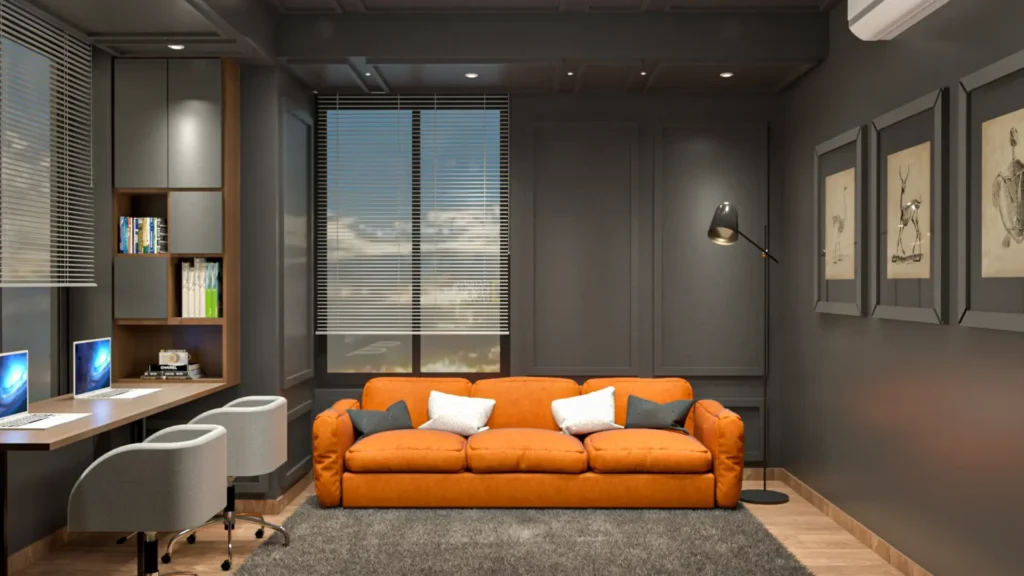
design sensibilities has become paramount in crafting fully integrated smart home spaces that are intuitive and not intimidating.
The smart home revolution grew out of the overlap of a number of technology trends, such as the ubiquity of Internet of Things products, advances in wireless technologies, the maturation of advanced home automation systems, and declining prices for technologies that once commanded premiums. What once was started as high-end features only the affluent could afford has quickly democratized as smart home technology is now within reach of a wider group of homeowners who see the importance in making smart, forward-thinking homes an investment. The finest Delhi NCR interior designer now strategically integrates smart technology planning into design workflows at the very earliest conceptual levels, assuring that technological infrastructure and aesthetic vision evolve together and not as mutually rival considerations.
Understanding the Smart Home Ecosystem
The truly smart home exists as an integrated ecosystem in which different technological systems speak and act together to deliver seamless experiences to residents. Such an ecosystem generally includes lighting control systems that adapt according to the time of day and occupancy, climate management solutions that manage temperature and air quality to optimize efficiency while reducing energy expenditure, security and surveillance systems that bring peace of mind through live monitoring and notifications, entertainment systems that deliver rich audio-visual experiences, and voice-activated assistants that act as command centers for controlling various functions. The intricacy of marrying these different systems necessitates professional planning and implementation, and hence working with the finest interior designer in Delhi NCR who has expertise in smart home integration guarantees that technology makes life easier, not more complicated.
The cornerstones of any smart home environment are solid connectivity infrastructure to provide end-to-end communication between systems and devices. This infrastructure encompasses high-quality wireless networks with sufficient coverage across the property, optimally located network hardware to avoid dead spots, and sometimes extends to wired connectivity for mission-critical systems that require ultimate reliability. Over and above fundamental connectivity, smart homes increasingly feature local processing capabilities that enable systems to operate even when internet connectivity is lost, guaranteeing that key functionality is always available regardless of network conditions outside the home. Professional designers are aware that this technological infrastructure needs to be designed carefully in the design stage with proper conduits, access points, and future expansion potentials integrated into the architectural structure at the outset.
Intelligent Lighting Systems That Reinvent Spaces
One of the most striking and immediately apparent features of intelligent home design is smart lighting, which provides hitherto unimaginable control over ambiance, energy efficiency, and functionality. Contemporary smart lighting systems go far beyond basic on-off controls, allowing customers to control brightness levels, change color temperatures for various activities and times of day, develop personalized scenes that instantly alter rooms for varying uses, and schedule automatic times that match daily habits and natural body rhythms. The greatest Delhi NCR interior designer understands that lighting design has a deep influence on the way spaces are seen and lived, leveraging intelligent lighting technology to accentuate architectural elements, emphasize artwork and design, and generate dynamic environments that adjust to evolving needs over the course of the day.
Smart lighting installation necessitates special attention to fixture selection, control system design, and communication with other household systems. Modern intelligent lighting solutions vary from individually addressable bulbs in legacy fixtures to full-featured systems with architectural lighting components tailor-made for automation and control. Layered lighting strategies that integrate ambient, task, and accent lighting become exponentially more effective when smart controls allow for instantaneous reconfiguration of these layers to accommodate various situations. In enjoyment, for example, dramatic accent lighting may be prioritized, focused task lighting during work operations is first priority, and soft ambient lighting is used to create a soothing ambiance for unwinding in the evening. Collaboration with the best interior designer in Delhi NCR guarantees that intelligent lighting infrastructure accommodates these different lighting scenarios while ensuring coherence in terms of looks at all times.
Climate Control and Environmental Management
Intelligent climate control systems are another pillar of smart home architecture, providing accurate temperature control, enhanced air quality monitoring, and a marked improvement in energy efficiency relative to conventional HVAC systems. Smart thermostats become increasingly aware of household routines and habits over time, self-adjusting settings to keep homes comfortable while avoiding wastage of energy. These systems can generate multiple climate areas around the home, acknowledging that different spaces and residents might prefer different temperatures, and can be combined with occupancy sensors to prevent heating or cooling empty rooms. The environmental advantages of smart climate control are just one with the sustainability values that increasingly drive residential design, making them especially appealing to eco-conscious homeowners hiring the top interior designer in Delhi NCR who balances both luxury and responsibility.
Aside from temperature control, whole-house environmental control systems also track and regulate air quality through integration with air cleaning systems, humidity controls, and ventilation management. These systems can detect pollutants, allergens, and excessive carbon dioxide levels, automatically adjusting air filtration and ventilation to maintain optimal indoor air quality. In cities like Delhi, where outdoor air quality frequently deteriorates to unhealthy levels, smart air quality management becomes not merely a luxury but a health necessity. Advanced systems can even integrate with weather predictions and external air quality monitoring services to maximize ventilation strategies, introducing fresh outdoor air when environmental conditions allow while sealing and filtering when external air quality gets worse. The top interior designer in Delhi NCR is aware of such regional environmental issues and implements smart home systems that address region-specific issues specifically while keeping integration flawless with overall design aesthetics.
Security and Privacy in the Connected Home
Intelligent security systems have transformed home security, providing total protection, immediate alerting, and remote monitoring features that give homeowners a level of peace of mind never before known. Modern smart security features video doorbells supporting remote visitor screening, distributed camera systems with advanced motion detection and facial recognition features, smart locks allowing keyless entry with temporary access codes for guests and service providers, window and door sensors that track every entry point, and integration with professional monitoring services for coordinating emergency response. The psychological reassurance offered by strong security systems cannot be overemphasized, and the best interior designer Delhi NCR offers ensures that security technology fits seamlessly into design schemes safeguarding homes without producing fortress-like effects that undermine the warm, welcoming nature of residential spaces.
The growth of networked devices and cameras in smart homes automatically leads to serious privacy concerns that dutiful designers need to handle. Balancing security value against privacy considerations necessitates careful planning regarding camera location, data storage and encryption methods, network segmentation isolating security systems from home networks, and policy for who has access to security images and system control. Trained designers assist homeowners in sorting through these technical complexities, putting into place security measures offering security without creating surveillance atmospheres that are intrusive or uncomfortable. The best interior designer in Delhi NCR stays current with evolving privacy best practices and regulations, ensuring that smart home implementations respect both security needs and privacy rights while maintaining the seamless integration that defines exceptional smart home design.
Entertainment and Multimedia Integration
Home entertainment systems have evolved dramatically with smart home technology, transforming dedicated media rooms and integrating sophisticated audio-visual experiences throughout living spaces. Distributed audio systems provide whole-home music streaming with zone control so that there can be different music in each of different rooms or synchronized audio for the whole home for parties and gatherings. Home theater systems with immersive surround sound and high-definition projection or display technology provide movie-quality experiences within the home. Smart TV systems combine streaming services, game platforms, and traditional broadcast programming into integrated interfaces that make content access and management easier. The difficulty is in incorporating these robust entertainment systems without letting technology take over or control the aesthetic decisions, where the skill of the top interior designer in Delhi NCR comes into play to reconcile functional needs with design purity.
Acoustic factors inherent to good audio system design overlap in interesting ways with interior design methods, since room size, surface material, and placement of furniture all greatly affect sound quality and delivery. Trained professionals who specialize in smart home systems appreciate these interactions, choosing finishes and furniture that enhance great acoustics as well as playing a beauty role. Speakers that blend into ceilings and walls contribute to uncluttered visual lines while providing impressive sound. Media equipment racks and cabinets are beautifully disguised in custom millwork or pieces of furniture that preserve design integrity while storing required technology. The top interior designer in Delhi NCR treats entertainment integration as a chance to improve functionality and beauty simultaneously and not as conflicting demands, designing spaces where technology enhances design intent instead of dominating it.
Kitchen and Appliance Intelligence
The smart kitchen today is the best example of how technology integration can turn functional areas into efficient, networked spaces that make life better every day. Smart appliances such as in-door camera-equipped refrigerators with inventory management, ovens that can be remotely preheated and monitored, dishwashers with load-sensing cycle optimization, and coffee makers that brew the perfect cup on voice command or schedule are just the tip of the iceberg when it comes to kitchen intelligence. Such appliances are increasingly interoperable with one another as well as with more extensive home systems, allowing coordinated operation such as recipe-based cooking where appliances adjust to suitable temperatures and times automatically depending on chosen recipes. The top interior designer in Delhi NCR takes appliance integration into account during kitchen planning, providing suitable power infrastructure, best positioning for functional as well as aesthetic appeal, and easy integration into cabinetry and scheme designs.
In addition to stand-alone appliances, full smart kitchen systems integrate lighting that adapts to various cooking and entertaining situations, ventilation that automatically reacts to cooking activity and air quality sensing, and built-in displays or voice assistants that offer cooking instructions, handle shopping lists, and operate multiple kitchen functions hands-free. Countertops with built-in wireless charging keep device power going without unsightly cords filling workspace. Smart water filtration and dispensing systems monitor filter condition and water usage. Such combined features are what turn kitchens into more than functional spaces but into intelligent ones that actively aid and augment cooking activity while preserving the sleek elegance defining superior kitchen design. Employing the top interior designer in Delhi NCR guarantees that technological functionality and design elegance march forward together and not at the expense of one over the other.
Automated Window Treatments and Daylight Management
Intelligent window treatments are a high-end intersection of energy efficiency, privacy control, and visual control that is the epitome of what well-conceived technology integration can provide. Motorized curtains, blinds, and shades may be programmed to adjust themselves according to time of day, sun angle, room occupation, and temperature factors to maximize natural light while controlling heat gain and privacy. These systems can be integrated with security systems to generate occupied appearance patterns when the houses are empty, and with lighting systems to provide optimal levels of illumination regardless of the conditions outside. Modern treatments employ sensors that monitor the sun angles and make automatic adjustments in the course of the day, achieving maximum natural light transmission while avoiding glare and shielding the furniture from direct sunlight. The top interior designer in Delhi NCR considers window treatments as a part of overall design that defines views, wraps architectural lines, and makes considerable contributions to the aesthetics of a room while playing essential functional roles boosted by wise controls.
The choice of window treatment materials, styles, and operating systems involves a balance of aesthetic needs with practical issues surrounding light control, insulation characteristics, and technology possibilities. Sheer fabrics allow for privacy with retained views and sunlight, blackout materials allow for total light control for bedrooms and home theaters, and cellular shades introduce outstanding insulation capabilities complementing smart climate control systems. Motorization introduces convenience but with added power infrastructure planning and periodic maintenance considerations. When window treatment controls are integrated into whole-home automation systems, advanced programming and scene creation become possible, such as slowly opening bedroom shades upon awakening to mimic sunrise, or lowering shades automatically during the hottest part of the day to minimize cooling loads. Professional designers are aware of these complex factors and provide recommendations that maximize both short-term functionality and long-term satisfaction. The finest interior designer in Delhi NCR makes sure that window treatment choices and controls work cohesively with design visions overall as well as provide the functional benefits that make technology worthy of investment.
Voice Control and Artificial Intelligence Integration
Voice-controlled control systems developed quickly from novelty components to core smart home interaction paradigms that make natural, intuitive system operation possible without physical interfaces. Today’s voice assistants are able to manage nearly every function of smart home systems using natural language voice commands, from controlling lighting and temperature to playing music, offering weather conditions, setting reminders, and answering questions. The advantage of voice control especially excels in situations where hands are busy or when the use of physical controls would be inconvenient, like setting the settings while cooking, lowering lights from bed, or controlling home functions while entering with arms loaded with groceries. The top interior designer in Delhi NCR places voice assistant devices strategically or embeds voice control functionality in the current systems to provide end-to-end coverage without compromising on individual design cohesion or creating a cluttered look that numerous visible technology devices are prone to produce.
Artificial intelligence adds depth to smart home functionality beyond mere command fulfillment by allowing systems to discover patterns, predict needs, and make proactive adjustments that enhance comfort and efficiency. Machine learning algorithms study patterns of use in order to balance energy use, forecast optimal settings for various times and situations, and detect anomalies that may signal issues in need of repair. Predictive functions allow homes to start warming or cooling prior to the arrival of residents, optimize lighting according to habitual routines, and offer energy-saving options based on usage analysis. These smart actions build ever-more integrated experiences in which homes appear to predict and react to requirements without ongoing manual control. The best interior designer Delhi NCR wide who is conversant with AI incorporation enables homeowners to achieve these cutting-edge features while retaining control and visibility to make sure that automation serves and does not control family members.
Energy Management and Sustainability
Intelligent energy management systems are one of the most expensive and environmentally consequential elements of intelligent home design, providing real-time energy use monitoring, inefficiency identification, and optimization opportunities that save substantially on utilities and environmental impacts. Holistic energy management monitors consumption trends on various systems and appliances, giving full insight into where and when energy is consumed. Such visibility allows for smart decision-making regarding usage habits, appliance modernization, and system tuning. Coupling with smart grid technology and time-of-use pricing allows load shifting to occur automatically, operating high-load appliances during off-peak hours when electricity is cheaper and grid load is lower. Solar panel systems equipped with smart inverters and battery storage enable maximum utilization of renewable energy production. The top interior designer in Delhi NCR takes energy management into account while planning in the initial stages, so homes have the right monitoring infrastructure in place and tech choices favor energy efficiency, along with performance and looks.
Smart energy management’s environmental advantages go beyond individual household gains to add significantly to overall sustainability objectives. Lower energy use, in turn, means less carbon emissions, especially in areas where electricity is produced primarily from fossil fuels. Intelligent systems allow better utilization of renewable energy when present and lower overall usage during peak hours when the utility companies tend to switch on less efficient backup generating capacity. Water management systems monitoring consumption and identifying leaks have the same advantages for water conservation, especially relevant in water-scarce areas. The most efficient interior designer in Delhi NCR who is concerned with sustainability enables the residents to adopt thorough resource management that is compatible with environmental standards while achieving measurable financial advantages via lower utility bills and possibly being eligible for green building certification or utility rebates for efficiency enhancements.
Future-Proofing and Scalability Factors
Smart home designing involves considering beyond short-term needs and existing technology capabilities to establish scalable infrastructure that can adapt to evolving innovations and shifting needs. The speed of technological change implies that particular devices and systems will become outdated, but good infrastructure design allows relatively easy upgrades and additions without the need for extensive renovation or system replacement. Overengineered wiring beyond present demands, large conduits for future cable installation, well-engineered network infrastructure with upgrade capacity, and open control protocols permitting interoperability between products from various manufacturers all make for homes that are forward-looking. The top interior designer in Delhi NCR knows that smart home investment spans decades, not years, and architects systems with longevity and flexibility as major factors as well as current functionality.
Scalability allows homeowners to deploy smart home features incrementally instead of needing full installation prior to occupancy. Phased deployment enables budget management, learning curve adaptation, and priority deployment where the most valuable features are installed first and extension is built over time as needs and interest change. Modular system design in which components may be added or enhanced separately without compromising entire systems enables this adaptability. Cloud-delivered control systems that get automatic updates and capability additions without hardware modifications extend life and usefulness. The top interior designer in Delhi NCR develops technology roadmaps that define what can be implemented in the immediate term, near-term growth opportunities, and long-term potential, enabling homeowners to envision how their smart homes can expand and develop with their needs and technological prowess.
The Rishabh Interior Advantage in Smart Home Design
Successful integration of technology with interior design calls for skill that crosses boundaries, uniting extensive knowledge of interior design techniques with in-depth familiarity with technology capabilities, constraints, and deployment needs. Rishabh Interior applies such multidisciplinary skill to clients across Delhi NCR, drawing on extensive residential and commercial project experience to develop smart home spaces that excel on both functionality and beauty. Their client-oriented strategy ensures that technology deployments suit client lifestyles and tastes instead of imposing solution sets in advance, and their multi-experience spanning various types of projects gives valuable insights into what works well across varied environments. Hiring Rishabh Interior as the top interior designer in Delhi NCR is to be allied with experts who believe in technology adding to people’s living experiences without creating more complexity or sacrificing design vision.
The professional supervision and comprehensive project management that Rishabh Interior provides ensures that smart home implementations proceed smoothly from initial planning through final commissioning. Coordinating multiple technology vendors, managing installation timelines, ensuring proper integration between systems, and thoroughly testing all functionality requires detailed oversight and technical expertise. Their dedication to keeping up with maturing technologies and new capabilities ensures that clients have the advantages of the latest solutions without risk of early experimental systems with suspect reliability. The company’s long-standing relationships with quality technology vendors and installation experts guarantee top-shelf products and experienced implementation. For homeowners and businesses across Delhi NCR who want to build smart spaces that embody the future of interior design, Rishabh Interior provides the expertise, commitment, and end-to-end capabilities that turn smart home visions into superior living experiences that beautify daily life with never-fading design charm.
Conclusion:
Joining the Smart Home Revolution
Smart home integration is not a fad but an intrinsic transformation in the way we plan and live in residential and commercial environments. Technology combined with considered interior design produces spaces that are more comfortable, efficient, secure, and attuned to occupant requirements than ever before attainable. As the technological abilities keep improving at a phenomenal rate, the underlying principles of effective integration do not change: unobtrusive use, easy control, visual harmony, and significant improvement in everyday life and not technology itself. The top interior designer in Delhi NCR knows these principles and uses them judiciously to design intelligent homes which are natural and intuitive and not intimidating or complex.
As intelligent home technologies become more prevalent and the expectations surrounding intelligent functionality keep growing, the concern for homeowners transitions from whether or not to adopt smart capabilities to how to optimize implementing them to bring about the most benefit and enjoyment. This implementation issue calls for professional expertise from designers familiar with both technological capabilities and design concepts, able to handle sophisticated decisions around system choice and integration, and who are able to stay focused on designing lovely, functional spaces that just so happen to be intelligent, not technology displays that compromise design quality. By careful planning, professional installation, and continuing support, intelligent home visions become daily realities that improve the quality of life, add value to property, and place homes at the leading edge of living innovation.