The Psychology of Interior Design: How Spaces Affect Mood and Productivity
The spaces we inhabit wield profound influences over our mental state, emotional wellbeing, and daily performance, extending far beyond the realms of aesthetic concerns. Interior design psychology is the coming together of environmental psychology, neuroscience, and design principles in making spaces that actively support human flourishing, rather than just simply providing shelter. Understanding how design elements impact mood and productivity has become essential for creating environments where people feel energized, focused, and emotionally balanced throughout their daily lives.
Understanding the Basic Link that Exists Between Space and Psychology
The relationship between our surroundings and psychological state runs at conscious and subconscious levels, wherein design elements stimulate neurological responses that help us feel and function within spaces. Colors affect hormonal flow and states of mind, while lighting can affect circadian rhythms and energy levels. Spatial arrangements have an impact on the social psyche and concentration, and textures and materials interact with the nervous system through their tactile sensations, be they soothing or stimulating.
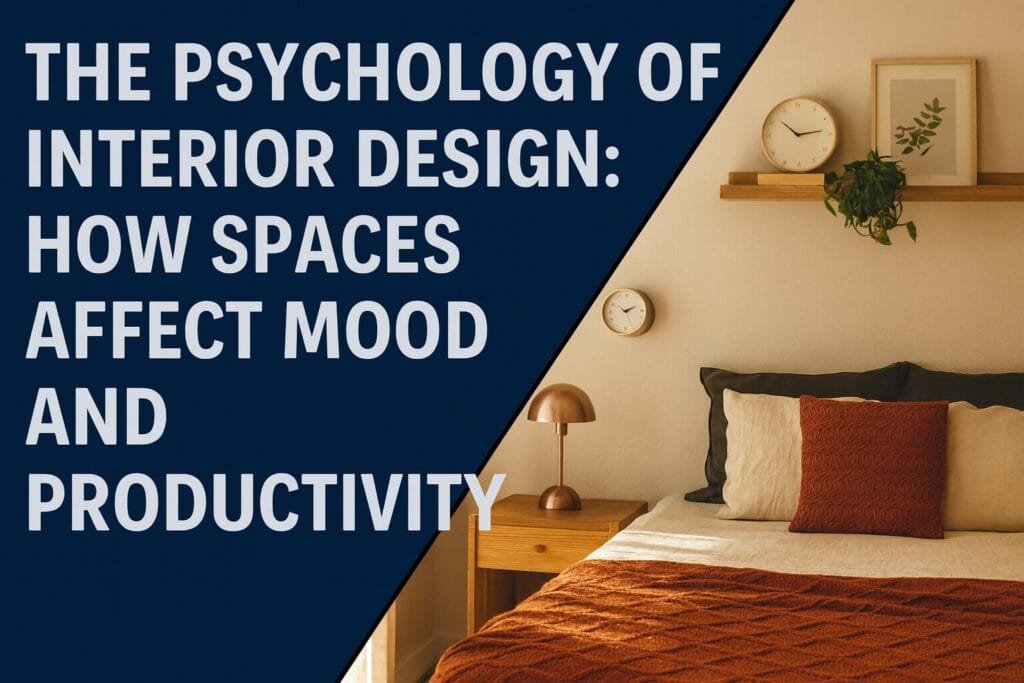
Thus, knowledge of these psychological factors while working with the Best Interior Designer in Delhi NCR will ensure that design decisions facilitate desired emotional and functional outcomes rather than inadvertently working against them.
The same environmental psychology principles reveal that badly designed spaces lead to stress, fatigue, and low cognitive performance, while well-designed environments facilitate creativity, focus, and emotional resilience. This effect is most evident in places where people spend most of their time, such as homes, offices, and hospitality settings. Professional designers that understand such psychological dynamics are able to design spaces meant to work like therapeutic settings, actively bolstering mental health and productivity rather than serving aesthetic purposes alone.
Color Psychology in Interior Spaces: How Does it Really Work?
Color is one of the most powerful psychological tools an interior designer can use because different hues lead to distinct emotional and physiological responses. Warm colors, such as red, orange, and yellow, are considered energizing and stimulating. They speed up heart rate and develop a sensation of warmth and excitement. Cool colors, such as blue, green, and purple, generally cool and relax occupants. They reduce blood pressure and often induce tranquility and focus. This insight into color dynamics enables designers to pick color palettes that match the intended functions for certain spaces and emotional atmospheres.
The best interior designer in Delhi NCR uses color psychology effectively in both residential and commercial settings, with a deliberate color palette chosen to enhance specific activities and emotional states: bedrooms featuring sleep-conducive blues and soft greens, home offices invigorated with energizing yellows or focusing blues to heighten concentration, and living areas with balanced color palettes that create warmth without overstimulation, relaxing and socially bonding space. The sophistication lies not in applying rigid color rules but in understanding how colors interact, how lighting conditions affect color perception, and how individual preferences and cultural associations influence color responses.
Lighting Design and Its Impact on Circadian Rhythms and Mood
Lighting plays a very significant role in human physiology and psychology, essentially regulating the circadian rhythms responsible for controlling normal sleep-wake cycles, hormone production, and even energy levels throughout the day. Natural light is crucial for maintaining healthy sleep patterns and a positive mood; many studies have shown that poor natural light is associated with depression, fatigue, and lower cognitive performance. Well-designed artificial lighting supplements natural light and supports circadian health, while poorly executed lighting can cause eye strain, affect sleep patterns, and be a factor in mood disorders.
Effective lighting design incorporates multiple layers including ambient lighting for general illumination, task lighting for specific activities, and accent lighting for visual interest and emphasis. The quality of light matters as much as quantity, with color temperature affecting alertness and relaxation. Cool white light with higher color temperatures promotes alertness and focus, making it ideal for workspaces during daytime hours. Warm white light with lower color temperatures encourages relaxation and comfort, proving perfect for evening hours and residential spaces. An experienced interior designer understands how to orchestrate these lighting layers, creating environments that support natural biological rhythms while providing adequate illumination for all activities.
Spatial Organization and Its Influence on Productivity and Social Dynamics
How spaces are organized fundamentally shapes how people move through environments, interact with others, and accomplish tasks. An open layout facilitates collaboration and social connection but at the cost of reduced privacy and increased distractions, whereas compartmentalization reduces unwanted distractions, allows focus, and affords acoustic privacy, yet simultaneously may create isolation in the individual and a reduction in spontaneous interaction. The psychological impact of spatial organization also involves one’s sense of control, where cluttered, disorganized spaces increase levels of stress and cognitive load, while well-organized environments foster clarity and efficiency.
The Best Interior Designer in Delhi NCR approaches spatial planning with deep understanding of how layout decisions affect human behavior and psychological experience. Residential designs balance private retreats with communal gathering spaces, creating homes that support both individual needs and family connection. Office environments incorporate zones for focused work, collaborative activities, and casual interaction, recognizing that productivity requires diverse space types supporting different work modes. Hospitality spaces guide movement intuitively while creating distinct zones for different experiences, from intimate conversation areas to energizing social spaces. This sophisticated spatial thinking creates environments that feel natural and comfortable while supporting desired activities and interactions.
Biophilic design plays an important role in wellbeing and stress reduction.
Biophilic design incorporates elements of nature into the built environment, drawing from an innate human bond with nature for its psychological perks. Studies consistently show that exposure to natural elements decreases levels of stress hormones, decreases blood pressure, improves mood, and even boosts cognitive performance. Adding in plants, natural materials, water features, and natural views makes such spaces inherently calming and restorative against the stressors of modern urban living.
Biophilic principles involve much more than just adding houseplants. It encompasses a series of strategies: maximizing natural light, choosing organic materials, using nature-inspired patterns and forms, and creating visual connections with the outdoors. Wood elements infuse warmth and organic texture, enabling lower levels of stress and increased feelings of comfort. Stone and natural textiles add to the tactile richness that engages sensory experience positively. Plants clean the air while introducing living elements that provide dynamic visual interest. When the Best Interior Designer in Delhi NCR incorporates biophilic principles, spaces become therapeutic environments that actively nurture mental health and emotional balance rather than simply avoiding negative impacts.
Acoustic Design and the Psychological Impact of Sound Environments
The state of mind and cognitive performance is deeply influenced by sound, while noise is considered one of the most serious environmental stressors in daily living. Excessive noise provokes increased levels of stress hormones, a loss of concentration, disturbed sleep, and other health problems, such as cardiovascular issues and mental disorders. In contrast, well-designed acoustic environments will support focused work, relaxation, and interaction by controlling reverberation, blocking unwanted sounds, and creating pleasant sonic experiences.
Acoustic design in residential settings can make bedrooms the quiet sanctuaries necessary for restorative sleep, living areas balance sociability with noise control, and home offices minimize distractions that seriously impair concentration. Commercial environments, however, call for even more sophisticated acoustic planning: offices balance open collaboration with focused work zones, restaurants create lively atmospheres without overwhelming diners, and healthcare facilities provide healing quiet that supports recovery. Professional interior designers integrate acoustic considerations from the very inception of a project by selecting materials that appropriately absorb or reflect sound, positioning spaces to minimize noise transmission, and incorporating sound masking when needed to create the optimal acoustic environment.
Material and Texture Selection to Provide Sensory Comfort and Emotional Response
The senses of touch and vision are critical in how we experience our environments through the materials and textures that we both feel and see. Smooth surfaces are modern, clean, and cold, while textured materials add warmth and interest, but their use must be carefully balanced to avoid visual overload. Natural materials such as wood, stone, and textiles tend to be more comforting and authentic than their synthetic counterparts, with their use connecting us to the natural world through rich sensory experiences.
Material selection also shows psychological messages about quality, permanence, and care. High-quality materials with rich textures suggest attention to detail and investment in the creation of meaningful environments, whereas cheap finishes and synthetic materials can create feelings of temporariness and neglect. The Best Interior Designer in Delhi NCR has selected materials that create appropriate sensory experiences for each space, balancing aesthetic appeal with tactile comfort and psychological impact: bedrooms incorporate soft textiles and smooth wood that soothe and comfort, kitchens balance durable surfaces with warm accents that make the heart of homes feel welcoming, and commercial spaces select materials that reinforce brand identity while creating environments where people feel comfortable spending time.
The Psychology of Scale and Proportion in Space Perception
Scale and proportion dramatically affect how spaces feel psychologically, with oversized rooms feeling cold and intimidating, while undersized spaces create feelings of confinement and stress. Of particular importance to psychological effect is ceiling height: high ceilings promote creative thinking and encourage broad conceptual processing, whereas low ceilings make individuals narrowly focus on detail-oriented tasks. The relationship between furniture scale and room dimensions again influences comfort and functionality, as appropriately scaled furnishings create balance in the space, while poorly scaled pieces can produce visual tension and reduced usability.
Creating psychologically comfortable environments requires understanding human scale and designing spaces that feel neither overwhelming nor constraining. Residential interiors benefit from varied ceiling heights that create distinct zones, intimate furniture arrangements that encourage conversation, and sightlines that provide visual interest without overwhelming occupants. Commercial spaces must balance grandeur with human scale, creating impressive atmospheres that nonetheless feel approachable and comfortable. Professional designers manipulate scale and proportion through architectural elements, furniture selection, and strategic placement of visual anchors that help spaces feel appropriately sized regardless of actual dimensions.
Personalization and Expression of Identity through Interior Design
Spaces that allow personal expression and reflect individual identity support psychological wellbeing by reinforcing sense of self and providing environments that feel authentically aligned with personal values and preferences. Generic spaces that could belong to anyone don’t provide the same level of psychological comfort and sense of belonging as personalized environments do. This principle is particularly important in residential design, in which homes should function as personal sanctuaries that support the unique lifestyles, interests, and aesthetic preferences of their inhabitants.
The Best Interior Designer in Delhi NCR balances professional expertise with respect for client individuality, creating designs that reflect personal style while incorporating psychological principles that support wellbeing. The collaborative process explores client preferences, lifestyle needs, and emotional responses to different design elements, ensuring final designs feel personally meaningful rather than imposed by external taste. This personalization extends beyond decorative choices to encompass functional decisions about space organization, lighting preferences, and material selections that align with how clients actually live and what makes them feel comfortable and inspired.
Creating Productive Work Environments Through Psychological Design Principles
Workspace design has a great deal of influence on productivity, creativity, and job satisfaction; research has shown striking differences in performance between well-designed and poorly designed work environments. Various factors are at play that have to do with access to natural light, acoustic privacy, thermal comfort, air quality, and appropriate ergonomic furniture to facilitate how people work best and feel about their jobs. Modern workplace design recognizes that different tasks require different environmental conditions; for the focused analytical work, quiet enclosed spaces support it, whereas creative collaboration requires open stimulating environments.
Home offices are a particular challenge since they are expected to be professional workplaces in shared residential settings. Good home office design creates psychological separation between work and personal life, even in less than ideal space, through strategic placement, distinctive aesthetic treatments, and physical or visual boundaries that prompt either work mode or relaxation mode. A professional designer creates home offices with minimal distractions, adequate task lighting, ergonomic principles, and elements that inspire and motivate while maintaining functionality. When a skilled interior designer applies workplace psychology principles to a home office, the results will be increased productivity, reduced stress due to work, and a healthy balance between work and life.
The Therapeutic Role of Interior Design in Healthcare and Wellness Spaces
Health-care environments are a prime example of how interior design can directly affect human experience. Studies have shown that intelligently designed health-care facilities can lessen patient stress, reduce the need for pain medication, shorten recovery times, and lead to better patient outcomes. Features such as views of nature, natural light, soothing colors, art, and comfortable furniture all help to provide healing environments that promote physical and psychological recuperation. The same psychosocial concepts that make health-care environments therapeutic also apply to residential wellness spaces such as spas, meditation rooms, and exercise rooms.
Designing therapeutic environments requires the incorporation of stress reduction mechanisms and recovery processes by adding elements that promote calm, comfort, and positive distraction from discomfort or anxiety. In this respect, nature connections are particularly powerful in healing contexts, with even simple views of greenery evoking measurable health benefits. The color choices focus on calming hues and avoid institutional impressions; lighting techniques support natural rhythms while providing ample illumination for activities; spatial organization is laid out in an easily understandable way to reduce confusion and anxiety. The Best Interior Designer in Delhi NCR applies these therapeutic principles not only within healthcare contexts but throughout residential projects, creating homes that actively support health and wellbeing rather than merely providing shelter.
Cultural Considerations in Design Psychology
Cultural background shapes most of the ways people interpret and respond to design elements. Colors, spatial arrangements, and material preferences all differ across cultural contexts. What may feel comfortable, luxurious, or appropriate in one culture may be deemed uncomfortable or even offensive in another. Global cities like Delhi NCR pose a special challenge since they contain diverse populations with various cultural associations and design preferences. Successful designers understand these cultural dimensions by providing spaces that respect cultural sensitivities and include universal psychological principles transcending cultural boundaries.
Cultural sensitivity extends beyond avoiding obvious conflicts to actively incorporating elements that resonate with client cultural identity and heritage. This might include color palettes drawn from traditional textiles, spatial arrangements that support culturally specific social patterns, or decorative elements that reference cultural history and values. The goal is not creating museum displays of cultural artifacts but thoughtfully integrating cultural elements in ways that feel authentic and personally meaningful. Professional interior designers working in multicultural environments develop deep cultural awareness, asking questions that uncover culturally specific preferences and associations that inform design decisions throughout the project.
Sustainable Design and Its Psychological Benefits
Sustainable design practices foster psychological wellbeing through the creation of healthier indoor environments, reduction of ecological guilt, and connecting of inhabitants to broader environmental values. Materials emitting fewer volatile organic compounds improve indoor air quality, reducing headaches, respiratory issues, and cognitive impairment associated with poor air quality. Energy-efficient designs create more comfortable thermal environments while reducing environmental impact. Natural and renewable materials connect the dwellers to the natural world while supporting sustainability values that increasingly matter for conscious consumers. The psychological benefits of sustainable design extend beyond physical health impacts to include feelings of alignment between personal values and living spaces. For people who care about environmental responsibility, living in sustainably designed spaces reduces cognitive dissonance and provides ongoing affirmation of values through daily experience. The Best Interior Designer in Delhi NCR increasingly incorporates sustainable practices not as afterthoughts but as fundamental design principles, selecting low-emission materials, specifying energy-efficient systems, and creating timeless designs that resist trend-driven obsolescence. This approach creates spaces that support both environmental and psychological health, allowing inhabitants to feel good about their choices while enjoying beautiful functional environments. ## Technology Integration and Digital Well-being in Modern Interiors Modern interiors need to judiciously incorporate technology while safeguarding against stress and distraction caused by technology. Smart home systems are convenient and efficient but need to be implemented with great care in ways that will enhance rather than complicate daily life. Lighting systems, climate control, entertainment systems, and security features-all can benefit from technological integration if implemented intuitively, along with appropriate backup controls that maintain functionality when technology fails. The psychological challenge lies in how to make technology serve human needs without technology becoming an additional source of complexity and frustration. Digital wellbeing considerations include creating spaces that support unplugging from constant connectivity and incorporate charging stations that keep devices out of the bedrooms, while media rooms create intentional technology engagement rather than passive screen time throughout homes. Work-from-home environments require especially careful technology integration, providing robust connectivity and ergonomic workstation design while maintaining boundaries to prevent work from infiltrating all aspects of home life. Professional interior designers balance technological capability with human-centered design, with spaces that support both digital engagement and digital detox as circumstances require. The Future of Psychologically Informed Interior Design The future of interior design places increasing emphasis on psychological well-being, in addition to aesthetic and functional concerns; designers are becoming collaborators in constructing environments that actively support mental health and human flourishing. Emerging research in neuroscience and environmental psychology continues to reveal new insights into how design impacts human experience-from the impact of curved versus angular forms on stress responses, to how ceiling patterns affect creative thinking. These insights enable increasingly sophisticated design interventions that optimize spaces for specific psychological outcomes. Technology also enables new approaches to responsive design, with environments that adapt to occupant needs through sensors that adjust lighting based on time and activity, climate systems that maintain optimal comfort, and space configurations that transform to support different activities throughout the day. The Best Interior Designer in Delhi NCR stays current with emerging research and technologies, incorporating evidence-based design principles while maintaining the artistic vision and cultural sensitivity that create truly exceptional spaces. This synthesis of science, art, and technology represents the future of interior design, creating environments that look beautiful, function flawlessly, and support psychological wellbeing throughout daily life. Conclusion: Designing for the Whole Human Experience The psychology of interior design transforms our approaches to the creation of space by shifting the exclusive aesthetics or functional considerations towards embracing the full spectrum of human experiences within built environments. Every design decision, from grand architectural gestures down to subtle material selections, makes an impact on how people feel and function within spaces. Consciously applying psychological principles, designers create environments that actively support mood regulation, productivity enhancement, stress reduction, and overall well-being, rather than leaving those crucial outcomes to chance. Working with a professional who understands design psychology proves essential in creating spaces that truly serve the needs of their inhabitants. The Best Interior Designer in Delhi NCR brings aesthetic acumen together with psychological insight to build beautiful environments that support mental health, enhance productivity, and provide the comfort and inspiration needed by people to thrive. Whether one is designing residential sanctuaries, productive workspaces, or therapeutic wellness environments, psychologically informed design forms the basis for spaces that look great but feel great throughout daily use, supporting human flourishing in every dimension.