Open Plan Home Designs: Pros, Cons & 2026 Trends
Open-plan designs have flipped homes inside out all over India. It is a layout that breaks the barrier of conventions and creates one large, flowing, interconnected living space. The entire concept was born from modernist architecture, but it has become mainstream in homes nowadays. Today, open-plan designs symbolize much more than just choosing a style. It reflects a change in lifestyle and dynamics of family life in urban India.
The best interior designer in Delhi NCR fathoms this evolution very well. They understand that the growing need for open layouts balances between aesthetic appeal and practical functionality. Modern families aspire to have space that accommodates togetherness, allowing individual activities to occur simultaneously. Such a delicate balance calls for expertise in spatial planning and design psychology.
Understanding Open Plan Concepts
The Open-plan living combines different functional areas, all in one continuous space. In other words, the kitchen, dining area, and living room often merge without dividing walls.
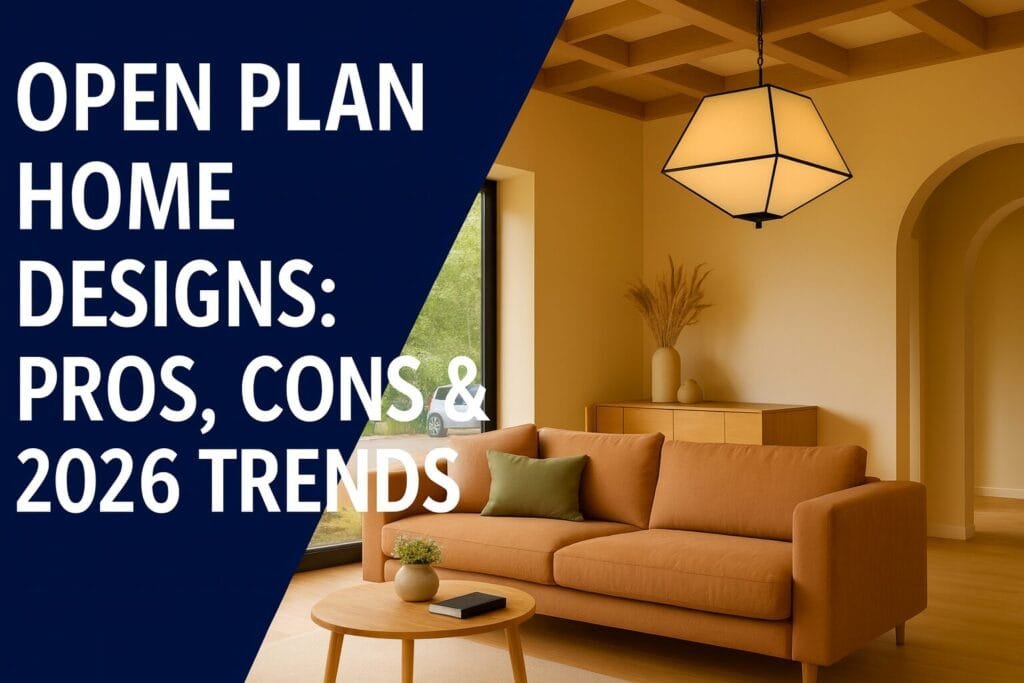
This, in turn promotes interaction among family members and creates a continuity in the visuals. The concept challenges traditional designs where each room, whether it be a bedroom, living, or dining room, had a specific purpose in the Indian home.
With an open plan, there needs to be great consideration for traffic flow. The people need ways through the space without interrupting activities. The placement of furniture is then very important in defining zones with no physical barriers. A good designer will use rugs, variations in lighting, and placing furniture to specify areas within an open area.
The open plan makes a difference in the spatial psychology of the resident, whereby one line of vision continues right into space, creating a sense of spaciousness. The absence of walls means that natural light can delve further inside a house. These are the very reasons developers attract buyers with open designs in compact Delhi NCR apartments.
Major Advantages of Open Plan Living
Spaciousness is one of the major advantages of open layouts: disappearing walls make rooms feel so much bigger. This feeling is especially useful for city apartments when any square footage is highly valued. A visual expansion will make a home feel more comfortable and less cramped.
Social interaction increases manifold in open plan homes. Parents can keep an eye on their children while preparing meals. A conversation between the kitchen and living areas flows quite seamlessly. The family members, though doing different tasks, would still be connected with one another. This connectivity strengthens family relations and enhances quality of daily life.
Open floor plans change the way natural light is distributed. A window in one room brightens up the next. With fewer walls, sunlight can easily pass through and across the entire house. This increased illumination reduces the amount of electricity required to light up homes during the daytime. It also provides much healthier living due to better support for circadian rhythms.
Benefits of Flexibility and Adaptability
Open plans can meet changing needs more easily than compartmentalized layouts. Furniture can be used to subdivide and define space in different ways to accommodate various functions. A dining area, for example, can expand for dinner parties and contract for daily use. Such flexibility proves to be of real worth as families grow and as lifestyles change.
The best interior designer in Delhi NCR leverages this flexibility creatively. They design such a space that transforms depending on the time of the day or occasions. Self-explanatory is the fact that multi-functional furniture and modular storage solutions tend to maximize the adaptability inherent in open layouts. These strategies make sure that homes remain relevant through life stages.
Open plan flexibility certainly works to the benefit of modern work-from-home requirements. Not always does a layout need to demand a dedicated home office space. The dining table becomes the workspace for sure during business hours. Corner nooks become backgrounds for video conferencing. This has certainly become an important factor in post-pandemic living.
Contents Entertainment and Hospitality Advantages
Open plans thrive when it comes to hosting parties and company. The hosts are not isolated in the kitchen but remain integrated with their guests. The open area naturally facilitates conversational speech throughout. Food service is also easier once dining and cooking areas are connected seamlessly.
The first thing that impresses a visitor is the visual impact of an open space. A good open layout displays interior styling in its entirety. Guests can see the whole living area at one time, notice the cohesive design vision it reflects, and thereby appreciate the beauty of that space. This makes for a great first impression and can add perceived value and aesthetic appeal to a home.
In fact, open arrangements serve well for the cultural gatherings common in Indian households. Extended family visits, along with festival celebrations, require spaces that have the flexibility to accommodate all. An open plan economically caters to fluctuating group sizes more gracefully than any traditional layout would. They allow for an expansiveness, literally and metaphorically, that is fitting for the inclusive hospitality so essential to Indian culture.
Limitations and Major Drawbacks
Loss of privacy is among the top open plan disadvantages. Activities in one area inevitably affect other zones. Personal calls become public conversations, and individual relaxation proves to be challenging when everyone shares one large space. Lack of privacy may further create tension when members of a household have different schedules.
Noise control in open plans is a never-ending battle. Kitchen noise transmits to living areas, the television volume interferes with dining table conversation, while kids’ play areas inhibit adult work areas. And sound control is largely about strategic design moves that are often afterthoughts for many home owners.
Clutter becomes much more visible without walls that could hide mess. The cluttered kitchen is immediately exposed from the living room. Unfinished laundry is now all over space, affecting its appearance. Keeping places pristine takes more discipline than traditional layouts demand from their occupants.
Temperature and climate control issues
Heating and cooling efficiency is normally lower in open plans. Large volumes of air require more energy to control. The problem of temperature fluctuations is often faced between zones. The heat in the kitchen increases the temperature of other adjacent areas during cooking. Delhi NCR faces extreme temperatures, which further makes climate control difficult.
Ventilation strategies should contemplate the entire open space in their entirety. Cooking odors spread throughout the home unimpeded. Strong odors emanating from the kitchen spill into both living and dining spaces. Proper exhaust systems are no longer optional, but compulsory. Proper installation of these, along with other mechanical systems, is best left to the professionals, who would avoid such problems.
Best Interior Designer in Delhi NCR integrates climatic considerations from the very conceptualization. They place the air conditioning vents at appropriate, strategic locations. They suggest installing ceiling fans that not only appeal to the design but also help in circulating air. These technical decisions play an important role in long-term comfort and energy costs.
Design Complexity and Execution Challenges
Creating cohesive aesthetics across large open spaces requires expertise. Every element remains visible from multiple viewpoints. Furniture styles must coordinate throughout the space. Color schemes need to be carefully planned in order to avoid visual chaos. This complexity is beyond the capability of most homeowners who try to do things independently.
In open designs, storage solutions necessarily become increasingly sophisticated. Traditional cabinetry and closets must be incorporated in such a way that they will not detract from the aesthetic. Hidden storage maintains clean visual lines while providing necessary functionality. Custom built-ins often prove essential for successful open plan execution.
The level of complexity in lighting design increases exponentially for open layouts. Various zones within the space will require different types of lighting and differing intensities of lighting. These may include ambient, task, and accent lighting, all of which should blend together in harmony. Both technical and aesthetic areas of lighting require professional expertise for the best outcomes.
Emerging Trends for 2026
Flexible zoning is the prevailing direction of renovation that’s redefining open plans. And homeowners want to be able to create temporary divisions more and more. Sliding panels, movable screens, and folding partitions offer flexibility. These elements enable spaces to transition from complete openness to partial separation.
Smart home integration significantly enhances the functionality of an open plan. Automated lighting systems change depending on the time of day and activity. Noise transfer between zones is diminished with sound-masking technology. Climate control becomes much more sophisticated with the management of temperature by zone. The integration of technology can play a large part in solving many of the traditional challenges associated with open plans.
Best Interior Designer in Delhi NCR leads the race with such developments in technology. They integrate smart systems into the designing itself, rather than going for retrofitting at later stages. This way, their homes are future-proof against the latest expectations and new capabilities that keep emerging.
Sustainability and Wellness Focus
Environmental consciousness influences the priorities of 2026 design significantly. Open plans allow for passive cooling due to better air circulation. Natural light reduces dependence on artificial lighting. These inherent sustainability advantages are in tune with the ecological awareness growing among Indian homeowners.
Biophilic design integration ushers in natural aspects into open living areas. Indoor plants work exceptionally well in light-filled open plans. Natural materials such as wood and stone can add warmth without the heaviness of visual appearance. These elements work in tandem to promote mental wellness and enhance aesthetic appeal.
Air quality considerations are increasingly driving design decisions. Open plans need highly sophisticated filtration systems that a more traditional layout might ignore. The kitchen’s exhaust capabilities are more important. These health-oriented improvements echo overall wellness trends in residential design.
Multi-Generational Living Adaptations
Indian families increasingly accommodate multiple generations under one roof. Open plans must balance communal living with individual privacy needs. That takes creativity-one of the very problems that traditional open layouts simply don’t solve. Partial walls, level changes, and strategic furniture placement create semiprivate zones.
Accessibility features move to the forefront of modern open designs. Aging parents require barrier-free movement around the home. Wide pathways and avoidance of steps become standard considerations. These inclusive design principles will benefit not just aging parents but all residents of multi-generational households alike.
The professional designers cognize these cultural and practical requirements. They develop open plans that reflect Indian family structures, yet are modernly appealing in appearance. This culturally sensitive approach makes great designers different from those that merely follow Western trends.
Material and Texture Innovations
Advanced materials enable new possibilities in open plan design. Discreetly hidden acoustic panels posing as elements of decoration provide sound dampening by reducing the transmission of sound. Transparent partitions provide openness visually yet offer some separation. Material science continually is expanding available options for designers.
Texture becomes more critical to define areas within open spaces: smooth flooring in living zones versus texture in dining spaces, slight variations in wall treatments between functional spaces. These tactile differences psychologically define the space without walls.
The best interior designers in Delhi NCR source materials thoughtfully. They balance aesthetic preferences with practical performance requirements. Durability, maintenance, and long-term appearance all factor into material selections. This comprehensive approach ensures designs remain beautiful and functional for years.
Color Psychology in Open Spaces
A color strategy needs to be carefully considered in open layouts, since the entire space needs to feel cohesive while different zones need distinct identities. Subtle color variation defines areas without creating jarring transitions. This is sophisticated and requires an understanding of colour theory and spatial psychology.
Neutral base palettes rule successful open plan designs. These foundations allow accent color to define the zones. The dining area might be in a warmer tone, whereas the living space uses cooler hues. These calculated variations direct the eye and provide psychological ordering of the space.
Light dramatically affects color perception in open plans. Natural daylight brings out colors identically, unlike artificial lighting. One has to take into consideration the way colors will look throughout the day in different lighting conditions. This technical knowledge separates amateur attempts from professional execution.
Selection and Placement of Furniture
In open plans, furniture serves double duties. It provides function while defining spatial boundaries. Sofas with low backs preserve sightlines and separately define the living areas from the dining ones, while kitchen islands create natural divisions without blocking the views. Placed strategically, furniture becomes architectural elements.
Scale and proportion are critical outside. Oversized furniture overpowers the space, and undersized pieces disappear visually. This is where the professional designer really knows how to balance these considerations. They would choose furniture that serves the specific zone, as well as the overall space.
Modular furniture provides quite convenient flexibility. Sectional sofas reconfigure to suit different needs for the space and can also be used to create open divisions within the floor plan. Expanding dining tables can receive more or fewer guests depending on the occasion. Such pieces very well perform under the purposes of open plan living principles by extending further the inherent flexibility of the layout itself
Budget Considerations and Value
The cost of open-plan renovations can vary dramatically. The removal of walls usually requires structural assessment and the correct placement of supports. Modifications to mechanical systems then often add to the overall expense. However, the investment will generally create a substantial rise in the value of the property. Delhi NCR real estate markets, especially, garner a strong preference for well-implemented open layouts.
It involves professional guidance in allocating the budget. Money spent on quality finishes shows throughout the visible space. This is where strategic investments in a few key areas create the most impact. A skilled designer will be able to help direct where money is spent for the most effective solutions possible within budget.
The best interior designer in Delhi NCR does a very transparent cost estimate. They identify where to invest and where to economize. Their experience prevents costly mistakes that amateur renovations often encounter. This expertise, in fact, is money-saving with superior results.
Implementation and Project Management
Converting traditional layouts to open plans involves complex coordination. Structural engineers, contractors, and designers must collaborate seamlessly. Timeline management prevents the project from disrupting daily life excessively. Professional project management proves invaluable for smooth execution. Phasing strategies allow the family to remain in the home while renovation is taking place. Essential spaces can remain usable while work proceeds around them. Such an approach causes less disruption and reduces temporary housing cost. Skilled designers are thoughtful to such phases. The quality control throughout construction ensures that what is finally constructed is per the design vision. It catches issues early by way of regular site supervision. Material specifications are to be adhered to with exactness. Professional oversight protects the investment and expectation of the homeowner. Conclusion and Outlook The open plan design is going to keep evolving, not disappear. In fact, the swing to flexibility and adaptability is a nod to those previous Achilles’ heels. Technology increasingly circumvents many of the classic open plan issues. Forward-thinking designs bring in the lessons from yesteryear while embracing innovation. Success means balancing openness with needs for privacy. The best designs offer both spaces that encourage communal gathering and opportunities to retreat. It represents the natural evolution of open plan concepts. Working with the Best Interior Designer in Delhi NCR ensures your open plan achieves its full potential. Skilled professional expertise navigates the complexities and avoids common pitfalls. The investment in quality design services will pay dividends every day through superior living satisfaction and in the long-term value of the property. Moving through 2026, an open plan is relevant when it is thoughtfully executed with contemporary insights and cultural sensitivity.