False Ceiling Lighting Ideas for Modern Indian Homes
In today’s Indian households, lighting is no longer a matter of illumination but a revolution in design. The false ceiling, which once had a purely functional façade, is now a clever platform for light, transforming a simple room into a welcoming space.
In this context, people living in the Delhi NCR region experience this transition most. The eclectic and cosmopolitan nature of this region requires a light aesthetic which reminds one of tradition yet remains contemporary in nature. Staying updated with all things trendy is a requirement for anyone, and design is where this need is fulfilled.
To grasp false ceiling lighting fundamentals is to understand how this additional level of a ceiling can support built-in lights, concealing wires and improving acoustics and aesthetics. Being one of the top interior designers in Delhi NCR, Rishabh Interior designs have skillfully incorporated ceiling designing with strategic lighting solutions, with more than 200 accomplishments in their portfolio.
Lighting affects both moods, usability, and energy consumption. LEDs have revolutionized ceiling lighting in terms of control over light intensity, color, and effects.
Why lighting matters in Indian homes? Such spaces have multiple roles—living rooms doubled as work spaces to entertainment spaces. Versatile lighting technology adjusts accordingly. Given different intensities of natural light, right from scorching summer to rainy monsoons in a place like Delhi, artificial light sources have to make up for this deficiency.
A good designer will bring out climate-responsive designs by themselves. Rishabh Interior takes into consideration the extremes of Delhi and light variations.
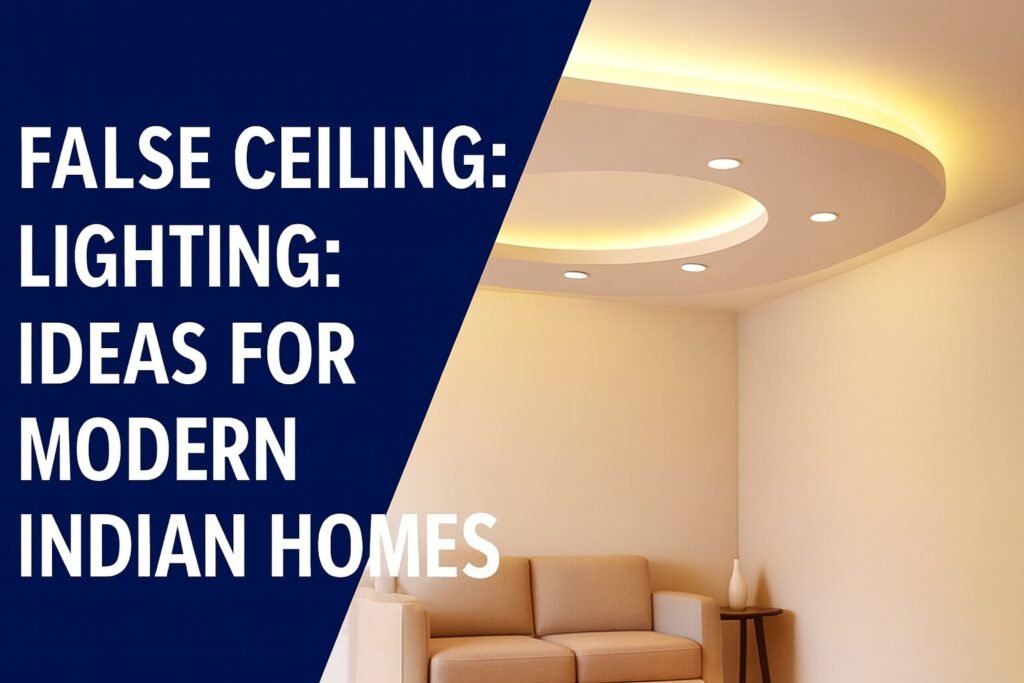
Cove lighting is one of the most common methods of false ceilings. Using LED stripes in recessed edges, a soft, indirect light is produced with minimal harsh shadows. The effect is warm, modern lighting that bounces off ceilings rather than bathing a room, thus relieving strained eyes.
In Delhi, the application of cove lighting is most effective in traditional and modern settings. With color temperatures, you can adjust the ambiance accordingly.
Things to keep in mind when creating coves:
Depth: Shallow coves will produce bright lines, and deep coves will produce soft glows. Professional calculations will avoid underwhelming effects. The quality of LED light strips can affect performance. Better-quality light strips have consistent colors, but lower-quality ones sometimes change color along the length.
The most skilled designers in a geographic area recommend using commercial-grade LEDs.
Recessed downlights are very stylish. They are mounted right against ceilings, which is a perfect fit for rooms with lower ceilings because suspended light fixtures will appear very massive in such rooms.
Selecting an appropriate down light configuration is important, fixed lights being used for generating a room’s ambience and adjustable lights for pointing out artwork or highlighting architectural elements. The angle of light determines spread, which can be wide for ambience or focused for accents. A good designer will utilize computer programs to strategically arrange all such lights.
LED light strips tap into creative possibility. Thin, flexible LED-filled paths with many small LEDs can curve through a space and travel through small channels. RGB light strips have a color-changing mode with warm white tones for a cozy atmosphere or bright white tones for a morning pick-me-up.
Examples include ceiling boards with a floating appearance and highlight lighting in beams, cornices, and moldings. Examples of effective designs using strips can be seen in Rishabh Interior’s portfolio.
Statement chandeliers are very much in vogue in Indian homes. Contemporary false ceilings do not compete with statement chandeliers but rather complement them with recessed lighting fixed in a circular pattern around the chandelier. This combination brings a dramatic effect to living spaces when entertaining but sufficient light for everyday living. Coordination of materials is a consideration in this combination, with metallic trims complementing brass or copper chandeliers.
Geometric designs for ceilings, such as squares, rectangles, and circles, are in vogue. The designs are traced by LED light stripes so that light is incorporated into architecture rather than being an addition. The evening shadow effects of these designs make them aesthetically appealing.
Smart integration with lighting systems updates ceiling control in a digital way. Scenes enable you to transition to ‘Movie mode’ or ‘Dinner party with a simple touch. Voice control, motion sensor technology, and occupancy sensing all work towards making life simpler for a smart homeowner. A designer with a vision will take into consideration the integration with other systems in place.
Ceilings are where task lighting shows effectiveness. Kitchen work areas are ideal for bright, focused light rays, but reading corners require directional light sources with adjustable directions.
Kitchen design can incorporate under-cabinet lighting, but mounting ceiling spotlights in strategic positions will alleviate shadowing in the cabinets. Pendant lights above an island mark an open-plan area, and a good designer considers this when designing spaces.
Natural light can be augmented using ceiling design. Light-colored ceilings help reflect light into rooms. Indian climatic conditions make this technique very effective in Delhi because it not only saves light cost but also reduces cooling demand because artificial light contains a lot of heat.
To incorporate both natural and artificial light sources, seamless transitions are a must. Computerized dimming controls artificial light in harmony with natural light changes, and color temperatures need coordination to make transitions look natural from day into night. A good designer blends all light sources to appear unified in the light of everyday cycles.
Materials used in illuminated ceilings can be different. Gypsum boards are used because they have a smooth finish and can readily take paint. POP is less expensive with a higher porosity. Wood is used to bring in a warm look but requires proper illumination to prevent hot spots, which can be avoided using indirect lighting to show off wood texture in a dramatic manner. Textured finishes include matte, which provides glare-free illumination, glossy, which can cause hot spots, and translucency with materials such as frosted acrylic or special fabrics.
A designer with expertise in design matches materials with light strategies.
Color temperature affects moods. Warm white light (2700K – 3000K) is ideal for creating a cozy atmosphere, cool white light (4000K – 5000K) helps increase alertness and is suitable for a kitchen or office, and neutral white light (3500K) is ideal for a wide space. It is important to remember space-specific advice, such as a bedroom requiring warm light for a relaxed atmosphere, a dining room requiring warm lights for illumination, and an office requiring cool light for focus.
Energy efficiency is another important consideration. LEDs consume 75% less power than traditional light bulbs and have a much longer lifespan. In an expensive electricity city, this can quickly make a big impact.
Zoning and occupancy sensors reduce energy consumption further by extinguishing lights where they are not required, a common practice in green designs. A smart and energy-aware strategy strikes a balance between comfort and expense.
Acoustics can greatly benefit with careful consideration of ceiling finishes. Sound-absorbing panels can eliminate echoes in an echoic space with an open plan, and perforated panels with backlighting can provide both functionality and added aesthetic appeal. A unified designer will factor sound and light into creating very comfortable spaces.
Maintaining them is important too. Correct mounting will go a long way in ensuring they do not sag, and ventilation is essential for an LED driver if early failure is to be prevented. The presence of dust in the atmosphere of Delhi makes it essential to design luminaires with accessibility in mind.
Cultural Sensitivity
Cultural sensitivity is a critical factor in ceiling designs in Indian homes. Pooja room lighting will incorporate warm ambience with highlight effects on gods. Festival lighting designs have to blend with ceiling designs for effortless celebrations. Additionally, traditional designs can be highlighted in terms of light effects on wooden carvings.
“Color and Symbolism are important considerations. Lighting design must take into consideration cultural associations with certain colors, but a good designer will balance this with a modern approach,”
Rishabh Interior, incorporated in 2007, is a respected Design Partner in Delhi NCR, completing over three million square feet of projects in both residential and commercial domains. Their lighting design ideology focuses on layered lighting, using a variety of light sources in a way that provides functionality and complexity to spaces. They work with clients in depth, using 3D designs to conceptualize projects before execution.
Their services include everything from concept to implementation, ensuring light designs are well incorporated into interior designs. They tap into a broad base of suppliers both locally and internationally, ensuring a competitive pricing strategy without diminishing quality. Project management is coordinated in line with electrician timetables to ensure flawless execution within time.
Why do clients pick Rishabh Interior? Being a foremost interior designer in this part of the city, they keep abreast with new lighting technology trends. Their repertoire includes designs for traditional and new-age apartments, which speaks volumes for their level of adaptability. Their professionalism, attention to detail, and timekeeping have won them many clients in Delhi NCR. Budget-conscious lighting can be achieved with careful planning. Target high-effect areas, stretch projects over time to spread expenses, and take on simpler projects such as LED strips yourself, but hire pros for electrical installations. Smart decisions in materials can cut costs too. POP ceilings have budget-conscious solutions available, and indigenous-led production of LEDs cuts costs because of enhanced quality. Smart designers will help you spot wise trade-offs to achieve maximum benefit. While designing a lighting plan, it is important to begin with an understanding of room function and usage. While designing, it is important to think in terms of flexibility and future change. Professionals can help in understanding all available options. Previews in 3D can assist in making decisions. In essence, false ceiling lighting is one of the most potent tools available in interior design. When executed effectively, this tool succeeds in taking everyday life up a notch and further takes the aesthetic experience of a residence to a higher level. The design trends in Delhi NCR are not falling short in this manner and have continued to come up with solutions for all your requirements in a manner that is not only potent and efficient but also revolutionary in nature. With the aid of a reliable consultant such as Rishabh Interior, you can light up your space in style.