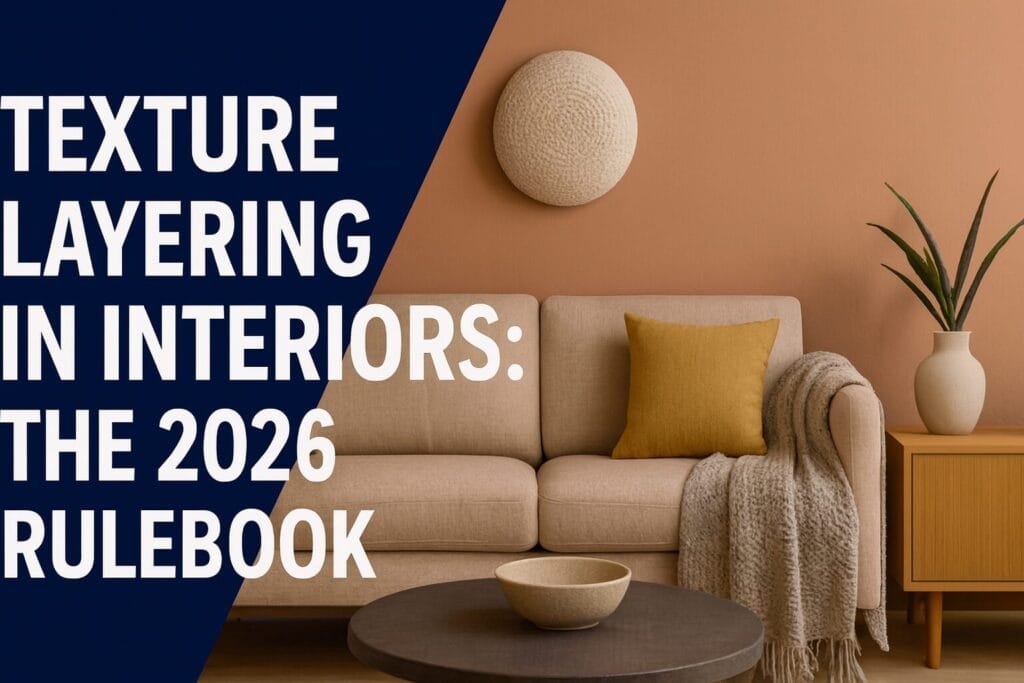
Texture Layering in Interiors: The 2026 Rulebook
Texture changes flat open areas into dynamic spaces. It adds depth without one needing additional square footage. The subtle play of rough against smooth creates visual interest that color alone cannot achieve. Modern interior design is finding texture not supplementary but essential.
Building up texture is a basic skill the best interior designers in Delhi NCR perfect. They know how different surfaces will interact with light and shadow, interact, complement, build depth, and even clash. They know which combinations create harmony and which produce discord. This expertise makes exceptional interiors merely adequate.
Texture engages our senses beyond the visual. We perceive spaces through touch, even when we don’t physically contact surfaces. Our eyes translate visual texture into imagined tactile experiences. When spaces are properly textured, they feel more complete and satisfying because of this multisensory engagement.
Understanding Texture Categories
Natural textures bring organic warmth to interior spaces. Wood grain, stone patterns, and woven fibers connect us to the natural world. These materials carry inherent irregularities that machine-made surfaces lack. Their imperfections add character and authenticity to designed environments.
Smooth textures contrast and add sophistication. Glass, polished metals, and lacquered surfaces reflect light nicely. They create clean lines and modern aesthetics. However, rooms composed completely of smooth surfaces often feel cold and unwelcoming.
Heavy textures add weight and rooting energy. Exposed brick, concrete, and raw wood create visual weight anchors; they absorb light instead of reflecting it. All this absorption creates depth and won’t make the spaces superficial and temporary.
The Foundation Layer Principle
Every well-textured room is based upon a foundational layer. Flooring typically establishes this base texture. Hardwood provides warmth and natural variation. Stone offers cool permanence. Carpet introduces softness underfoot. This foundation influences all subsequent texture decisions.
The second foundational element is the wall treatments. Smooth painted walls create neutral backgrounds, while textured wallpaper adds dimension. Exposed materials like brick or concrete make bold statements. The Best Interior Designer in Delhi NCR will have to balance the texture of the walls with that of the flooring in order to establish the overall character of the room.
Ceiling texture is often overlooked but highly influential in spatial perception. Smooth ceilings feel taller and wider. Coffered or beamed ceilings add architectural interest. Textured ceiling treatments can define zones in larger spaces. Thoughtful ceiling design completes the foundational layer of texture.
Building Secondary Texture Layers
Furniture brings in the main secondary layer of texture. Upholstered pieces introduce softness by way of fabric selections. Leather adds a lush, organic texture. The wood furniture provides grain patterns along with finish variables. The interaction of the textures of the furniture creates the tactile personality of the room.
Window treatments weigh heavily in texture perception. Heavy drapes add an idea of luxury, as well as a degree of sound absorption. Sheer curtains put an ethereal sense of lightness on the space. Wooden blinds add linear patterns, whereas Roman shades offer structured fabric textures. All these elements frame the views while adding to the texture composition.
Area rugs provide critical texture transitions. They define zones while adding warmth and sound dampening. A plush rug contrasts beautifully with smooth flooring. Flat-weave rugs suit minimalist aesthetics. Smaller rugs on top of larger ones introduce layering, adding complexity and visual interest.
The Rule of Three Textures
The 2026 rulebook stresses contemplative, limitation in texture. Three to five dominant textures per space. More is chaotic, few feels monotonous, while this range provides richness without being overwhelming to the senses.
Juxtaposition of textures should be deliberate and in balance. Rough should be set against smooth. Matte juxtaposed with glossy. Hard contrasted with soft. Such juxtaposition can create conversation between the various surfaces. They move the eye through space naturally.
Repetition of texture ties spaces together through cohesion. The repetition of tones of wood in different elements creates unity. Re-echoing fabric textures in different applications reinforces design themes. A good interior designer in Delhi NCR strategically repeats textures to build coherent visual narratives.
Scale and Proportion in Texture
Texture scale has to be fitting for the room scale. Large-scale textures are more suitable for spacious rooms, while a small-scale pattern is more suitable for rooms that are limited in space. Mismatched scale makes spaces uneasily occupied even if color schemes work.
The weight of textures can also be very different. Heavy textures, such as exposed brick, need to be balanced with lighter elements. Delicate textures must be anchored with heavier materials. Knowing this weight can help a space not feel top-heavy or insubstantial.
Distance greatly impacts texture perception. Fine detail work readable close-up disappears from across the room. Viewable distances for a space are an important consideration when designers choose a texture. A texture that works great in an intimate setting falls flat when used in large, open areas
Light Interaction with Textures
It is the natural light that shows texture in its most realistic form. The morning light gives very different textural emphasis from afternoon sun. North facing rooms handle textures differently than south facing spaces. In Delhi NCR, the harshness of sunlight plays a particularly significant role in deciding upon textures.
Artificial lighting can augment or break down textural effect. Directional lighting produces shade that delineates a surface variation. Diffused light reduces the perception of texture. The designers alter lighting to favor viewed textures and de-emphasize others.
Reflective textures magnify available light. This quality makes them precious in darker areas. The matte textures absorb light, creating warm intimacy. The Best Interior Designer in Delhi NCR balances the reflective and absorptive textures for desired lighting results.
Cultural context in selection of texture
Indian design traditions are full of rich textural layering. From handcrafted textiles to carved wood and delicate metalwork, every element in our design tradition finds a place. This blend of traditional textures with modern elements is being tried increasingly in contemporary interiors as well.
The choices of texture in Delhi NCR are influenced by considerations of climate. The heat of summer calls for cooling textures such as stone and cotton. Winter months call for warmer textures like wool and wood. Textures go through seasonal adjustment to keep spaces comfortable throughout the year.
Pragmatic texture choices will be necessary for multi-generational households. Slip-resistant flooring is required by elderly family members, while forgiving, soft surfaces are best for children. Layering texture effectively addresses varied household needs while creating aesthetic harmony.
Emerging 2026 Texture Trends
New texture trends are dominated by sustainable materials. Reclaimed wood, recycled textiles, and natural fibers are attractive to environmentally conscious clients. Such materials also tend to have more character than new alternatives. In addition to aesthetic value, their environmental credentials provide a substantive value.
Biophilic textures are indoor elements connected with nature through living features, organic texture, or improved air quality. Geologic history brings in natural stone features indoors. Movement and sound texture can be added with water features. All these elements promote wellness and enhance visual interest.
Textures with integrated technology represent the most recent innovations in the field. Smart fabrics take on different properties based on conditions. Programmable surfaces change texture appearance digitally. While of a seemingly futuristic nature, these technologies remain very current and available to visionary designers and clients alike.
Mixing Traditional and Contemporary Textures
Successful texture fusion requires balancing. A lot of tradition is staler than bread gone stale. Much modernism is cold. The sweet spot links together comfort with sophistication. The better the contemporary Indian interior, the more balance they show.
Handmade textures give life to modern spaces. A modern room is complete with traditional textile throws. Modern furniture feels warm when associated with artisan accessories. These combinations respect heritage while embracing progress.
The Best Interior Designer in Delhi NCR excels in this cultural-contemporary balance, understanding the unique position that Delhi holds between tradition and modernity. Their textural choices reflect this duality while creating timeless spaces.
Practical Guidelines for the Selection of Texture
Texture choices are greatly influenced by maintenance requirements. Dust tends to collect on highly textured surfaces and such surfaces need more cleaning. Smooth surfaces show wear different from rough surfaces. Practical considerations, therefore, must balance aesthetic preferences.
The durability of textured materials can be quite different. High-traffic areas require strong textures that will maintain their appearance over time. Less exposed spaces can bear gentler choices in texture. Strategic placement of texture prolongs the life of designed interiors.
Budget constraints affect the options of texture substantially. Most natural materials are bound to be more expensive than some other synthetic alternative. However, quality textures prove to be more economical long-term. They maintain beauty and withstand wear better than cheap substitutes.
Room-Specific Texture Strategies
Diverse layering of texture adds to a living room. Comfortable seating really demands soft fabrics. Coffee tables add harder surfaces, while the decorative elements add a visual variety of texture. This mix provides an invitation to inviting and dynamic spaces.
Bedrooms require soothing texture combinations. Soft bedding creates tactile comfort. Smooth wood furniture adds warmth without stimulation. A minimal amount of variation in texture promotes restful environments. The strategic use of restraint is what characterizes successful bedroom design in terms of texture.
Kitchens and bathrooms call for water-resistant textures. In this case, tiles, stones, and sealed woods are likely to dominate. However, the textile elements and wood accents avoid clinical feelings in the rooms. Strike a balance between functionality and warmth for areas that are prone to moisture.
The Psychology of Texture
Textures act to create a mood and affect behavior in subtle yet dramatic ways. Rough textures suggest a rugged grounding of feeling, and substantial weight. Smooth surfaces put forward meaning that suggests sophistication and formality. Soft textures engender relaxation, encouraging comfort. Designers deliberately play with these psychological effects.
The perception of texture is influenced by associations of a cultural nature. Marble connotes luxury in most cultures. The meaning of concrete will read as industrial in one context, sophisticated in another. Being conversant with these associations can help the designer avoid unintentional messages in the spaces being designed.
Personal preferences for texture vary greatly from one individual to another. Some people love the sensuality of velvet. Others find it uncomfortable. Successful design accommodates client preference and preferences while educating about broader possibilities.
Pattern as means of Creating Texture
Geometric patterns create a visual texture without physical variation. Stripes add linear texture to a composition. Circles can introduce softness. Angular patterns can create a dynamic feel. Such optical textures contribute to layering without adding physical dimension.
Organic patterns are reminiscent of natural textures. Floral motifs evoke garden softness. Abstract natural-inspired patterns feel quite sophisticated, yet still grounding. These designs successfully bridge texture and pattern.
Pattern scale follows the same proportional rules as physical texture. Large patterns suit big rooms, while small patterns work in compact spaces. The Best Interior Designer in Delhi NCR coordinates pattern scale with physical textures for cohesive results.
Texture in Minimalist Design
For minimalism to shine, it relies much on subtle texture variation. With fewer elements, each takes on greater weight. Material quality then is key. Every surface should be there for a reason, in terms of tactile interest.
Monochromatic schemes display texture well. Without color differential, our eyes focus on surface qualities. White-on-white schemes are successful by carefully layering texture. A method that requires sophistication in understanding about texture relationships
Negative space allows textures to breathe. Overcrowding diminishes textural impact. Strategic restraint lets featured textures shine. This is the discipline that characterizes mature, confident design.
Innovation of Technology and Texture
3D printing allows the invention of personalized texture. Designers are now able to specify exactly what surface quality is desired. This technology democratizes complicated textures that beforehand required skilled craftspeople. It widens up possibilities at an affordable price.
Digital visualization tools support clients in understanding texture options. Virtual reality walkthroughs show how textures will interact. These technologies reduce ambiguity and enhance decision-making. They are huge leaps forward in the process of communicating with clients.
Smart materials have their texture properties changing dynamically. Fabrics will, for instance, change porosity depending on temperature. Electronic signals will alter reflectivity of surfaces. Though not mainstream, these types of inventions are going to change the game in fundamental ways for texture design.
Avoiding Common Texture Mistakes
One of the biggest mistakes is texture overload. Too many competing textures create visual noise. Spaces feel chaotic rather than richly layered. Discipline and editing keep this from happening.
Scale relationships ignored result in uncomfortable feelings. Huge textures in small rooms oppress; light ones in large rooms disappear. Appropriate scaling ensures textures enhance instead of fight spatial proportions.
Neglecting the realities of maintenance upsets the owner who had expectations. Beautifully thrilling textures that start deteriorating in no time certainly upset the homeowner. The Best Interior Designer in Delhi NCR strikes a balance between aesthetic ideals and practical maintenance needs.
Layering Texture on a Budget
Accent pieces provide affordable texture impact. One statement rug can add so much to the texture interest in a room. Throw pillows economically introduce fabric variety. These are smaller investments that return substantial visual dividends.
Natural materials are less expensive than one might think. Bamboo, jute, and cotton offer some beautiful texture at a very reasonable cost. Items made by local artisans also provide interesting texture at relatively low costs. With some creative sourcing, great textures can be found to fit even the tightest budgets.
The benefit of this is that the costs have been phased over time. Essential textures are prioritized in the first design phases; the layers for refinement are added later on over several months. It makes professional texture design accessible to a greater number of homeowners.
Long-Term Texture Planning
Design longevity requires timeless choices of texture. Trendy textures quickly become dated, while classic materials can remain beautiful for decades. Investment in quality foundational textures pays dividends over time. Adaptability guarantees that designs remain relevant, even as needs change. Neutral textured bases accept varied accent textures. Therein lies the flexibility for easy updates, sans complete redesigns. Strategic planning creates spaces that evolve gracefully with time. Professional guidance avoids costly texture mistakes. Experienced designers anticipate problems before they occur. They understand how textures age and interact over time. This expertise protects client investments while assuring lasting satisfaction. Conclusion Texture layering defines great interior design in 2026. This is what separates the professional spaces from the amateur attempt. The principles here give a framework upon which successful texture can be implemented. Of course, as with everything else, true mastery requires experience and intuitive understanding. Working with the Best Interior Designer in Delhi NCR alone guarantees that the choices of texture elevate your space to its best. The contribution of professional designers lies in bringing technical knowledge, aesthetic judgment, and practical experience to the table. The balance of their work remains between understanding the complexity and maintaining the clarity of vision. As texture continues to evolve with trends, there are principles that never change. Contrast, balance, and intentionality create the beginnings of great texture design. Be it innovative state-of-the-art or a nod to traditional methodology, these very principles will steer you in the direction of an exquisite, livable space that transcends time.