How to Use Mirrors for Space & Light: 2026 Guide
Mirrors can completely transform an indoor setting in ways that few design elements can. They increase natural light, create the sensation of expanded space, and add sophistication with style to any room. As 2026 progresses, homeowners in Delhi NCR are growing increasingly aware that a mirror is much more than just an element of functionality; instead, it is an important design tool.
Understanding the Transformative Power of Mirrors
Mirrors are used for so much more than checking one’s appearance. In addition, strategic mirror placement can completely change the essence of a space in both form and function. They bounce light into dark corners, make small rooms feel spacious, and add interest visually through reflection.
The science of how mirrors work their magic is all about the physics of light and the perception of vision. Reflected light doubles the effect of natural and artificial lighting. Our brain interprets reflected spaces as continuations of actual rooms, thus creating a perceived depth which does not exist in physical reality.
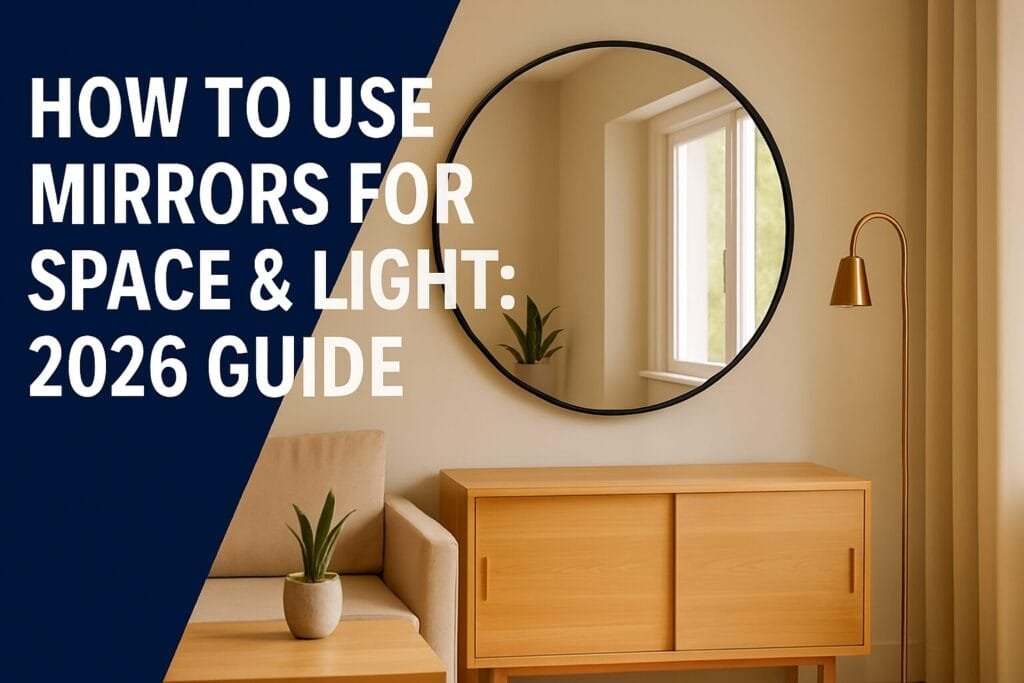
A Best Interior Designer in Delhi NCR knows this intuitively. The pros use mirror properties to solve some of the most common spatial challenges. They know exactly where mirrors deliver maximum impact and which placements create unwanted effects.
THE PSYCHOLOGY OF SPACE PERCEPTION BY REFLECTION
Human spatial perception greatly depends on the visual cues provided. Mirrors manipulate these cues, thereby tricking the brain into perceptions of rooms as larger than actual dimensions. This is a very valuable psychological effect in Delhi’s compact urban homes.
Reflected depth creates three-dimensional illusions of two-dimensional spaces. When mirrors reflect room continuations, the boundaries seem to disappear, and the eye follows reflections out to extend perceived space beyond physical walls.
The strategic placement of mirrors also influences emotional responses to a space. Bright, open-feeling rooms reduce stress and improve mood. Claustrophobic spaces trigger anxiety and discomfort. Mirrors can address these emotional responses visually.
Professional interior designers take into consideration psychological impacts with each aesthetic goal. They place mirrors in strategic positions that would enhance positive spatial feelings without disorienting or uncomfortable reflections. This talent morphs basic rooms into appealing havens.
Place Mirrors Strategically for Maximum Natural Light
Natural light greatly enhances interior ambiance and cuts down energy costs. Mirrors extend available daylight and allow it to pass through spaces more effectively. This technique proves especially valuable in Delhi NCR homes where pollution often reduces natural light intensity.
Positioning mirrors opposite or alongside windows traps and diverts sunlight. The reflected light reaches areas that direct sunlight never reaches. A north-facing room or a space with minimal windows benefits considerably from this approach.
Timing factors into mirror placement, as morning light is coming from east-facing windows while afternoon sun comes from the west. This means mirrors should capture light at times when the rooms are most used.
Mirror angles are responsible for changing patterns of light distribution. Slanting mirrors slightly upwards will let the light bounce up to the ceilings and create an ambient illumination effect. Vertical mirrors reflect light horizontally across the rooms. Knowing these angles maximizes lighting effectiveness.
The best interior designer in Delhi NCR analyzes the pattern of light during a whole day before they recommend mirror placements. They also consider seasonal variations, neighboring structures, and local climate conditions for accurate analysis that ensures optimization throughout the year.
Creating Illusions of Expansive Space in Small Houses
Compact living spaces are one of the fast-growing features in Delhi NCR’s real estate market. Mirrors present inexpensive methods of making small homes appear much larger. Such optical enlargements don’t need any structural changes or costly overhauls.
Floor-to-ceiling mirrors create dramatic spatial illusions. Full-height reflections eliminate visual breaks that remind eyes of actual room boundaries. This technique works particularly well in narrow hallways or small bedrooms.
Mirrored accent walls revolutionize the way an entire room is perceived. Completely covering one wall with mirrors effectively doubles the apparent size of the room. It is choosing the correct wall for this treatment that will determine the success or failure of the approach.
Corner installations of mirrors elminate perceived boundaries where the walls meet. Such strategic placements make rooms feel open and fluid, flowing without a sense of containment or constraint. This effect works particularly well in square or rectangular rooms.
Professional designers balance mirror sizes with room proportions. Oversized mirrors in tiny spaces can overwhelm, while undersized mirrors in large rooms fail to pop. Properly scaled, however, a mirror will enhance rather than dominate the space it is in.
Mirror Styles and Frames for Different Design Aesthetics
Efficiency with mirrors partially relies on frame styles and general aesthetic integration. The finest mirrors complement current décor while serving functional purposes. Trends in contemporary design for 2026 vary for every different interior style.
Frameless mirrors work for minimalist and modern settings. Clean-cut edges and simple installations keep the lines of vision minimalist. These mirrors, when placed, disappear into walls and let reflections be the focal point.
These ornate frames add character to traditional and vintage-inspired spaces. Carved woods, gilded finishes, and decorative details create real showpieces. These mirrors serve as artwork while providing functional reflection.
Industrial frames featuring metal finishes complement urban contemporary homes. Raw materials and visible hardware resonate with exposed-brick aesthetics, modern loft designs. These mirrors feel intentional rather than functional.
Geometric shapes are visually interesting, other than the standard rectangles. The round, hexagonal, and irregular shapes add an artistic touch to the walls. Clustered geometric mirrors create gallery-wall effects with reflective properties.
A Best Interior Designer in Delhi NCR selects mirror styles that go with overall design visions. They take into account architectural details, furniture styles, and color palettes. It means a holistic approach towards ensuring mirrors enhance rather than clash with the existing elements.
Room-by-Room Mirror Application Strategies
Different rooms offer different opportunities and challenges for integrating mirrors. Knowing room-specific considerations helps ensure that mirrors offer the most benefit possible in homes. Strategic approaches can differ based on room functions and existing layouts.
LIVING ROOM MIRROR SOLUTIONS FOR OPENNESS AND LIGHT
Well-placed mirrors work wonders in a living room. This social area should feel so inviting and spacious. Mirrors achieve both aims while adding decorative interest to feature walls.
Placing the mirrors behind the sitting areas creates depth without interfering with the furniture arrangement. The sofas and chairs can still serve their purposes while the mirrors provide optical expansion behind them. This way, the mirror also reflects some interesting elements of the room rather than some dull view outside the window.
Mirrors installed above mantels create traditional focal points while reflecting light from the fireplace around the room. This traditional placement works quite well in both traditional and contemporary settings. The placement higher ensures mirrors reflect ceilings and upper walls without reflecting the floors.
Leaning floor mirrors against walls create casual, contemporary aesthetics. Oversized mirrors make bold statements while remaining easily repositionable. Their substantial size delivers significant spatial impact without permanent installation.
Bedroom Mirror Placement for Function and Ambiance
Bedrooms call for careful consideration with mirrors. While reflection proves functionally useful, placement affects sleep quality and room energy. Thoughtfully positioned, it balances practical needs with restful atmospheres.
One of the many reasons why wardrobe mirror doors are popular is that they serve dual purposes. For one, they eliminate the need for a separate full-length mirror, and for another, they make closets less overwhelming. These mirrored closet doors will visually double the size of a bedroom when positioned in a strategic manner.
Dresser mirrors provide essential grooming functionality. Traditional placements above dressers work well, but modern approaches include wall-mounted mirrors at various heights. Adjustable-height mirrors accommodate different family members.
Mirrors directly opposite a bed should be avoided because it disrupts sleep. Most people find it eerie to see reflections of themselves when lying in bed. Side-wall placements provide functionality without creating uncomfortable sightlines.
Kitchen and Dining Mirror Uses
Traditionally, kitchens and dining areas have fewer mirrors than any other rooms. But using them purposefully can bring unexpected advantages in the most utilitarian of areas. Contemporary design increasingly takes advantage of reflective surfaces in the areas used for food preparation and dining.
Mirrored backsplashes multiply light while providing protective functions. Such dual-purpose installations make small kitchens appear and feel larger and brighter. Easy-to-clean mirror surfaces, when properly treated, suit kitchen environments rather well.
Mirrors in the dining room create elegant ambiances for entertaining. Large mirrors reflect dinner tables and guests, adding weight to any gathering. Candlelight reflections add romantic atmosphere during evening meals.
Placement of mirrors should avoid reflecting kitchen work areas where clutter will naturally accumulate. Strategic placement ensures that mirrors reflect dining areas or other displays rather than dirty dishes or food preparation.
The Best Interior Designer in Delhi NCR helps homeowners identify ideal kitchen and dining mirror opportunities. Professional guidance prevents common mistakes while maximizing these often-overlooked applications.
Bathroom Mirror-Innovation Beyond Basic Functionality
Aside from their obvious practical purposes, bathroom mirrors offer decorative and spatial benefits. Contemporary bathroom design views mirrors as less of an afterthought but rather an integral design element. Innovative approaches can now turn these supposedly ordinary fixtures into stunning features.
Backlit mirrors create flattering illumination while building spa-like settings. LED lighting behind mirrors offers energy-efficient, shadow-free lighting for grooming tasks. These installations feel luxurious while serving functional needs.
Double vanity mirrors balance symmetry and individual functionality. Separate mirrors for each sink area allow personal customization. This approach works much better compared to the placing of large single mirrors in shared bathrooms.
Medicine cabinet mirrors incorporate storage with reflection. Recessed installations retain clean wall surfaces with their hidden storage capabilities. The modern design disguises the function of storage within an elegantly presented mirror.
Full-height bathroom mirrors maximize small powder room impacts. The full height of reflection makes cramped spaces feel a great deal larger. This dramatic approach changes utilitarian half-baths into impressive guest facilities.
Hallway and Entryway Mirror Strategies
Hallways and entryways are great mirror opportunities. The transitional area usually lacks natural light and often feels narrow. Mirrors help with both challenges, offering functional benefits to residents and guests alike.
Entry mirrors serve utilitarian purposes in the sense that people like to check their appearance before leaving homes. Entry mirrors placed near doors become last-stop grooming stations. Small built-in shelves below the mirrors can also provide functionality for keys and mail.
Hallway mirrors help eliminate tunneling effects in long corridors. Strategically placed, these break up monotonous expanses of wall while adding depth perception. The extended hallways work better when more small, multiple mirrors are installed rather than singular large ones.
The positioning of mirrors will depend on what can be reflected in them. Entry mirrors, for instance, should reflect some beautiful interior views rather than a cluttered space. This would, therefore, be a consideration in choosing a mirror to ensure it enhances and does not highlight problem areas.
Technical Considerations for Mirror Installation
Proper installation ensures that mirrors deliver desired benefits and don’t cause problems. These include technical factors such as weight support, moisture protection, and safety considerations. Professional installation avoids costly mistakes and safety hazards.
Wall Preparation and Support Requirements
Mirror weights can vary tremendously depending on their size and framing materials. Walls must be able to bear very heavy loads without sustaining any damage. Improper installations run the risk of fallen mirrors, causing injury and property damage.
Stud-mounted installations give heavy mirrors maximum security. Locating wall studs ensures anchors attach to solid framing rather than just drywall. This critical step keeps you safe from accidents with big, heavy mirrors.
Hollow-wall anchors work for lighter mirrors where stud mounting proves impossible. Quality anchors distribute the weight across larger areas of the wall. Redundancy provided by many anchor points avoids single-point failures.
Adhesive installations suit frameless mirrors and backsplash applications. Specialized mirror adhesives bond securely, yet allow some repositioning during installation. These installations require clean, smooth wall surfaces for proper adhesion.
Moisture Protection in High-Humidity Areas
Bathrooms and kitchens expose mirrors to humidity that damages backing and causes edge deterioration. Protective treatments extend mirror lifespans in these challenging environments. Proper selection and sealing prevent premature failure.
Sealed-edge mirrors resist moisture penetration that causes backing damage. Factory-sealed edges protect vulnerable mirror backs from steam and splash. This feature proves essential in bathroom installations.
Adequate ventilation reduces humidity exposure, even with protected mirrors. Exhaust fans operating during and after showers remove the moisture well before it affects the mirrors. Such a simple practice greatly extends mirror life.
Gaps around the edges of mirrors from water sources prevent direct exposure. Mirrors should not extend into shower areas or directly behind sinks. Strategic positioning keeps mirrors functional while avoiding water damage.
According to the Best Interior Designer in Delhi NCR, appropriate mirrors for specific locations and installation are specified. Professional expertise prevents failures due to moisture through correct product selection and installation techniques.
Safety Considerations and Building Code Compliance
Safety regulations prevail in many places for mirror installations. Compliance offers safety to the residents, plus it keeps installations within the legal framework. Understanding these rules can help avoid problems with the sale of the house or when filing insurance claims.
Tempered glass requirements exist under certain circumstances. Areas around doors, low-placed mirrors, and larger installations require safety glass. Tempered mirrors break down into smaller, less harmful pieces, rather than sharp shards.
Proper installation keeps the mirrors from turning into projectiles during earthquakes. Seismic activities in the Delhi NCR demand secure installations that can withstand the shaking of tectonic plates. This involves professional mounting techniques that take into consideration such regional factors.
Edge protection prevents injury from sharp mirror corners. Polished or beveled edges eliminate hazardous sharp points. This finishing touch proves to be particularly important in homes with children.
Trends of Current Mirror Design that Will Shape 2026 Interiors
Design trends are ever-changing, and mirror applications move with these changing aesthetics. Current 2026 trends reflect broader movements toward sustainability, technology integration, and personalized space. Understanding these current trends means a number of contemporary interiors that will not quickly feel dated.
Smart Mirror Technology Integration
Technology-integrated mirrors are the future of interior design. Such products integrate the traditional reflection with digital function. Smart Mirrors perform multiple functions without compromising on aesthetic appeal.
Its integrated lighting automatically adjusts color temperature and brightness according to different times and tasks. The morning settings are cool and energizing, while the evening modes are warm and relaxing. Programmable controls create optimal conditions throughout days.
Digital displays superimpose information onto mirror surfaces. Weather forecasts, news updates, and calendar reminders flash when the mirrors are not actively being used for reflection. Displays disappear when people approach for grooming.
Voice control enables hands-free adjustments to your mirror: lighting changes, information displays, room temperature changes-all through voice commands. This functionality will fit perfectly into a busy morning routine.
Best Interior Designer in Delhi NCR stays updated about every new development in smart mirror technologies. Early adoption of proven innovations provides unparalleled functionality for the client while staying away from untested products that could disappoint.
Earth-Friendly and Sustainable Mirror Options
In 2026, all the design decisions will be influenced by environmental consciousness. Manufacturing and installing mirrors are done in an eco-friendly manner. The consumer is becoming aware of ecological concern and hence seeks to buy a product which has less environmental impact.
Recycled glass mirrors reduce raw material consumption. Manufacturing processes incorporating recycled content keep the quality high while reducing environmental footprints. These options appeal to a wide array of eco-conscious homeowners.
Local mirror production reduces transportation emissions. Delhi NCR-based manufacturers produce quality mirrors that eliminate shipping impacts from more distant factories. Supporting local production creates dual benefits for both environment and regional economy.
Long-term installations reduce waste by extending the life of a product. Well-made mirrors, when installed properly, last for decades in homes. This is more sustainable than cheaper alternatives that are required to be replaced more frequently.
Non-toxic backings eliminate toxic chemical emissions. Older mirror backings could emit VOCs into homes; newer alternatives provide equal performance without IAQ concerns.
Artistic Mirror Applications as Statement Pieces
Mirrors serve more and more as artistic elements, over and above their utilitarian functions. In contemporary installations, for instance, mirrors are used as sculptural features that transform spaces. Such creative uses blur the line between functional items and works of art.
The nature of clustered mirror arrangements brings drama to wall installations. Multiple mirrors in varying sizes and shapes create cohesive compositions. These arrangements deliver an artistic punch along with functional reflection.
Irregular shapes defy traditional rectangular mirror domination. Organic forms, asymmetrical designs, and unexpected silhouettes add interest. These artistic mirrors often become the room’s focal point and just happen to reflect.
Mixed-media installations merge mirrors with other materials. Wood, metal, and stone elements interact in unison with reflective surfaces. These complex pieces transcend simple mirror categorization.
Value of Investment and Long-Term Benefits
Quality mirror installations are worth investing in as they pay dividends through functionality and aesthetic appeal. Knowing the following benefits of mirrors can help a homeowner justify the cost of professional design and installation services. Long-term perspectives manifest the real value of mirrors.
Value Addition to Properties through Expert Design
Well-designed mirror installations improve marketability and the overall values of homes. Potential buyers respond well to space that feels open, bright, and is well thought out in design. Strategic mirrors play a very pivotal role in such positive impressions.
Professional installations signal overall home quality to prospective buyers. Attention to design details suggests that similar care was taken throughout properties, and this can affect offers and final sale prices.
Permanent installations such as mirrored walls or in-wall features directly transfer value to new owners. Unlike portable decoration, these elements become features of the home that justify a higher asking price.
Energy Efficiency through Natural Light Maximisation
Mirrors minimize the need for artificial lighting by reflecting natural light more efficiently. Lower energy use means lower utility bills over time. These are savings that add up quite significantly over years of occupying the home.
Extended daylight usefulness delays the need for evening lighting to be turned on. Rooms that are brighter later into the evening require less artificial lighting. This benefit is especially valuable during expensive peak hours for electricity. Reduced lighting needs also reduce cooling requirements. Artificial lights generate heat that the air conditioning systems have to overcome. Maximizing natural light with mirrors reduces this cooling burden. The Best Interior Designer in Delhi NCR quantifies probable energy savings at the time of suggesting installations of mirrors. The calculation helps a home owner understand the financial benefits beyond cosmetic improvements. Often, long-term savings justify initial investment costs. Creating Timeless Mirror Designs That Remain Relevant Investment in interior designs should be such that they remain relevant through changes in trends. Well-thought-of choices and placements of mirrors create an appeal that outlives temporary fashion. Classic approaches ensure that mirrors enhance homes for decades. Using neutral frames and straightforward styles eliminates outdated looks. Designs that are overly trendy and feel new today will quickly appear out of date. The timeless looks continue to remain attractive irrespective of the various design movements. Quality materials and construction ensure physical longevity to match design endurance. Well-made mirrors serve through years of use without deterioration. Such durability makes premium options more economical in the long term. The flexibility in installation allows for design changes in the future. Removable mirrors also enable updates without major renovations to a space. This flexibility enables homeowners to refresh a space while continuing to enjoy the benefits of mirrors. Pro design counsel avoids the costly mistakes of do-it-yourself. Expert recommendations ensure mirror investments deliver intended benefits while avoiding common pitfalls. This makes expert recommendations invaluable to homeowners who seek lasting results from design projects, which completely transform how spa