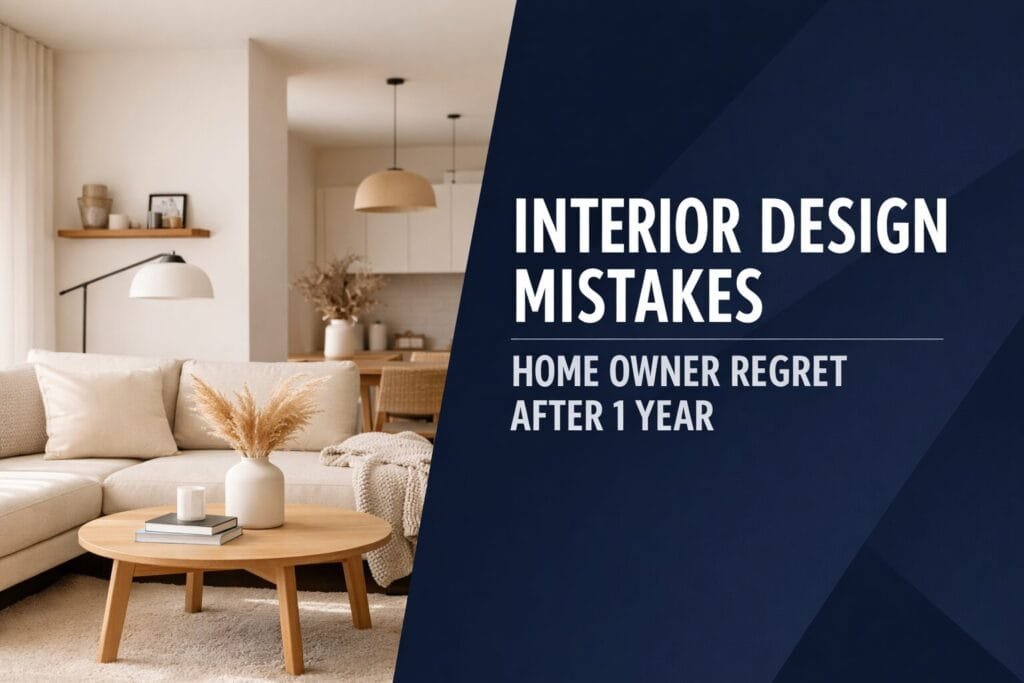
Interior Design Mistakes Homeowners Regret After 1 Year (And How to Avoid Them)
Discover common interior design mistakes homeowners regret after a year. Expert tips for homes in Delhi NCR to plan smarter interiors.
Most homes look beautiful on day one.
Fresh paint, new furniture, perfect lighting—everything feels right. But give it a few months. Sometimes even less.
That’s when small design decisions start showing their impact.
In my experience working with homeowners across Delhi NCR—especially in areas like Janakpuri, Dwarka, and West Delhi—the same pattern repeats. People don’t regret spending money. They regret where and how they spent it.
This blog isn’t about trends. It’s about real mistakes homeowners realise after living in their space for a year—and what you can do differently.
1. Choosing Looks Over Practical Use
This is the most common mistake.
A client in Dwarka once insisted on a light beige fabric sofa because it looked elegant in a showroom. Within six months, it had stains from daily use, especially with kids at home.
Homes in India are lived in actively—guests, festivals, daily wear and tear. Furniture and materials should reflect that reality.
What to do instead:
- Choose fabrics that are easy to clean
- Avoid very light colors in high-traffic areas
- Balance aesthetics with daily usability
2. Ignoring Storage Planning
At first, minimal interiors look clean and spacious.
After a few months? Things start piling up.
From extra bedding to festival décor, Indian homes need more storage than people expect.
A homeowner in Janakpuri once told me, “We didn’t plan storage because we wanted a modern look.” Within a year, they had added temporary cabinets that ruined the design completely.
What to do instead:
- Plan hidden storage (beds, ottomans, wall units)
- Use vertical space smartly
- Think about future storage needs, not just current
3. Poor Lighting Decisions
Lighting is often treated as a final step, but it should be part of the design from the beginning.
I’ve seen beautiful homes in West Delhi where a single white LED light ruins the entire mood of the space.
Common issues:
- Overly bright lighting that feels harsh
- No layering (ambient, task, accent)
- Ignoring warm lighting for living spaces
What to do instead:
- Combine ceiling lights with lamps and cove lighting
- Use warm lights for bedrooms and living areas
- Plan lighting based on activities, not just visibility
4. Buying Furniture Without Measuring Properly
This mistake is more common than you think.
People often buy furniture based on how it looks in a store or online, without considering room size.
A family in West Delhi bought a large dining table that looked perfect in the showroom. In their home, it made movement difficult.
What to do instead:
- Always measure your space before buying
- Leave enough walking space around furniture
- Visualise placement, not just design
If you’re unsure, even basic planning from experts at can help avoid such costly mistakes.
5. Following Trends Blindly
Trends change fast.
Last year it was fluted panels. Before that, it was all-white interiors. Now something else.
The problem is, trends don’t always suit every home.
Real scenario:
A client in Delhi NCR wanted a fully grey interior because it looked “modern.” After a few months, the house felt dull and lifeless.
What to do instead:
- Use trends in small elements (decor, cushions, panels)
- Keep base design timeless
- Choose colors and materials that match your lifestyle
6. Not Planning Electrical Points Properly
This is one of the most frustrating mistakes because it’s hard to fix later.
Common complaints I hear after a year:
- “We don’t have enough charging points”
- “Switches are not where we need them”
- “We have wires everywhere now”
What to do instead:
- Plan plug points for real usage (TV, laptops, appliances)
- Think about future needs
- Avoid placing switches in awkward locations
7. Overdesigning Small Spaces
Trying to fit too much into a small space can backfire.
In many apartments in Dwarka and Janakpuri, I’ve seen:
- Too many textures
- Heavy furniture in compact rooms
- Excess décor
It makes the space feel crowded.
What to do instead:
- Keep design simple in smaller homes
- Use multifunctional furniture
- Leave breathing space in layouts
8. Skipping Professional Planning to Save Cost
Many homeowners try to manage everything themselves to save money.
At first, it seems like a smart decision.
But after a year, they realise:
- They overspent on the wrong things
- The design doesn’t feel cohesive
- Small mistakes keep adding up
Reality:
Hiring a professional doesn’t always mean higher cost. It often means better planning.
You can explore affordable solutions like to understand how budgeting and design can go together.
9. Poor Space Planning
Sometimes everything in a home is good individually—but the layout doesn’t work.
For example:
- Sofa blocking natural movement
- Bed placed without considering wardrobe access
- Dining too close to kitchen pathway
What to do instead:
- Focus on how people move inside the house
- Keep pathways clear
- Plan layout before buying furniture
10. Not Thinking Long-Term
A home is not a short-term project.
But many decisions are made based on immediate needs or budget constraints.
Example:
A young couple in West Delhi skipped wardrobe interiors to save money. Within a year, they had to redo everything—at a higher cost.
What to do instead:
- Think 3–5 years ahead
- Invest in essentials first
- Avoid temporary fixes that cost more later
A Real Homeowner Story
One of my clients in Janakpuri had done their entire home without professional help.
Everything looked fine initially.
After one year:
- Storage was insufficient
- Lighting felt too harsh
- Furniture placement made rooms feel smaller
They ended up redoing almost 40% of their interiors.
What could have been planned in the beginning cost them double later.
Small Decisions That Make a Big Difference
Interior design is not about big budgets. It’s about thoughtful decisions.
Simple changes like:
- Choosing the right fabric
- Planning storage early
- Using proper lighting
- Keeping layout practical
can completely change how your home feels after a year.
Conclusion
A well-designed home should feel better with time, not worse.
Most regrets don’t come from big mistakes. They come from small decisions that were rushed or overlooked.
If you’re planning your home in Delhi NCR—whether in Dwarka, Janakpuri, or West Delhi—take a little extra time to think through how you will actually live in the space.
Because after a year, that’s what matters the most.
CTA
If you’re planning your home interiors and want to avoid these common mistakes, consider speaking with an experienced interior designer. A professional can help you plan your space practically, choose the right materials, and create a home that still feels right years later—not just on day one.