Interior Layouts That Eliminate Hallways
Hallways waste precious living space. They consume square footage without providing functionality. You walk through them but never actually use them. In expensive real estate markets, every square foot counts. Traditional home layouts dedicate significant areas to circulation that could serve better purposes. Modern design increasingly eliminates these dead zones. By reimagining how spaces connect, designers create homes that feel larger and work better. Every area becomes usable rather than merely transitional. The Best Interior Designer in Delhi NCR understands how to maximize space efficiency through innovative layouts that eliminate wasteful hallways.
Understanding the Hallway Problem
Traditional architecture relied heavily on hallways for circulation. Separate rooms lined corridors on both sides. This compartmentalized approach created privacy but wasted space dramatically. Long hallways in apartments and homes can consume fifteen to twenty percent of total square footage without providing any functional value.
Beyond wasted space, hallways create psychological issues. They make homes feel smaller than actual measurements suggest. They break flow and connection between living areas. They require lighting, flooring, and finishing despite serving no real purpose. Eliminating hallways addresses all these problems simultaneously.
The Open Plan Foundation
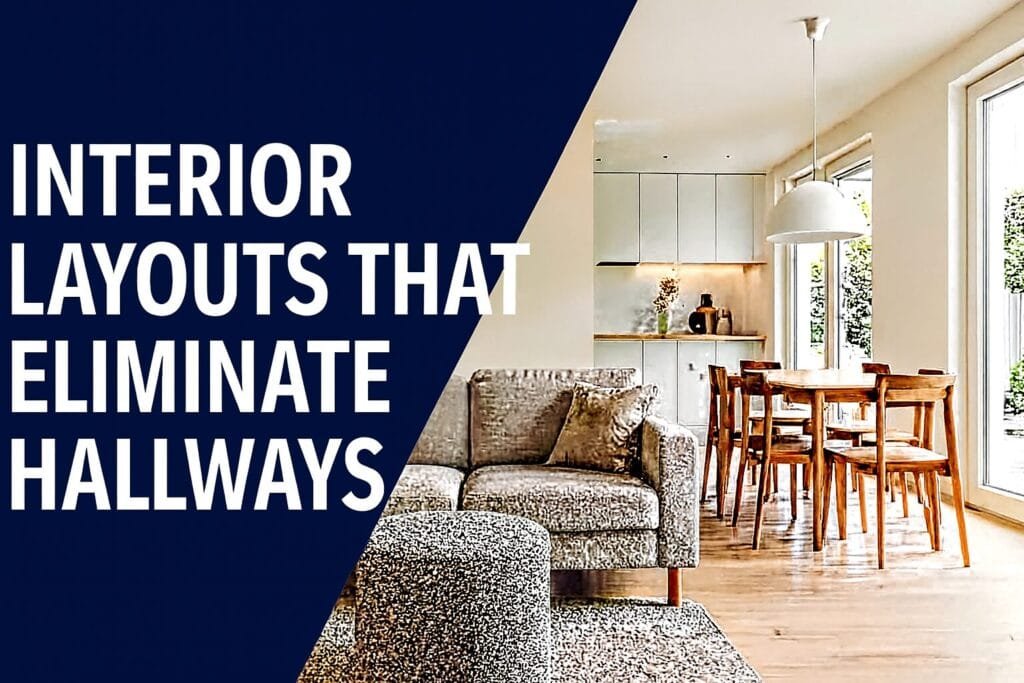
Open floor plans form the foundation of hallway-free design. Removing walls between living, dining, and kitchen areas eliminates circulation space needs. These areas flow directly into each other. Movement happens through functional spaces rather than dedicated corridors.
However, completely open plans aren’t always desirable or practical. Some separation serves important purposes. The Best Interior Designer in Delhi creates sophisticated open layouts that maintain necessary definition while eliminating wasteful hallways. They balance openness with privacy through thoughtful spatial planning.
Strategic Room Placement
Eliminating hallways requires strategic room arrangement. High-traffic areas should connect directly. Private spaces can nestle into corners. Bedrooms might cluster together. Service areas group efficiently. This intentional adjacency planning makes hallways unnecessary.
Rishabh Interior excels at this spatial choreography. They analyze how families actually use homes. They identify natural movement patterns. They arrange spaces to support these patterns without requiring dedicated circulation corridors. This analysis-driven approach creates homes that work intuitively.
Double-Duty Transition Spaces
When some circulation space is unavoidable, making it functional eliminates waste. Wide passages become gallery walls displaying art. Generous landings transform into reading nooks. Entrance areas expand into mudroom functionality. These double-duty spaces serve movement needs while providing actual utility.
Built-in storage along circulation paths adds function. Bookshelves line passages creating library atmospheres. Display cabinets showcase collections. Window seats utilize wide landings. The Best Interior Designer in Janakpuri ensures every square foot serves multiple purposes rather than existing solely for passage.
Central Living Cores
Hub-and-spoke layouts place main living areas centrally. Bedrooms and private spaces branch directly off this core. No hallways connect these branches. Each space opens immediately onto the central area. This arrangement maximizes efficiency while maintaining privacy.
Kitchen, dining, and living areas form the central hub naturally. Family members gather here most frequently. Private bedrooms extend outward. Bathrooms cluster efficiently. This logical organization makes hallways completely unnecessary while creating natural family flow.
Enfilade Room Arrangements
Enfilade design connects rooms directly in sequence. One space leads directly into the next. No hallways separate them. This classical European approach creates dramatic sightlines and eliminates wasted circulation space.
Modern interpretations of enfilade maintain the direct connection while adding flexibility. Pocket doors provide privacy when needed. Wide openings maintain flow when desired. This adaptable approach gives homeowners choice without sacrificing space efficiency.
Stairway Integration
Staircases in multi-level homes traditionally required dedicated stair halls. Modern design integrates stairs directly into living spaces. Open staircases become architectural features rather than hidden circulation. This integration eliminates hallway waste while adding visual drama.
Rishabh Interior designs stunning integrated staircases. Floating stairs maintain openness. Glass railings preserve sightlines. Storage integrates under stairs. These multifunctional elements eliminate traditional stair hall waste while becoming design focal points.
Sliding and Pocket Doors
Flexible separation replaces permanent walls in hallway-free designs. Sliding doors close for privacy when needed. They disappear when openness is desired. Pocket doors slide completely into walls. These flexible barriers allow privacy without dedicating space to hallways.
The Best Interior Designer in Delhi NCR specifies high-quality sliding systems that operate smoothly for years. They position these flexible elements strategically. They create privacy options without compromising the open, hallway-free layout benefits.
Split-Level Solutions
Split-level designs create separation through vertical rather than horizontal distance. Living areas occupy one level. Sleeping areas exist several steps up or down. This vertical separation provides privacy without hallways. Short stair runs replace long corridors.
These level changes define zones clearly. They create interesting architectural variety. They eliminate long hallways while maintaining functional separation. Half-level differences provide sufficient acoustic separation for privacy without wasting square footage on hallways.
Corner Room Positioning
Positioning rooms at plan corners eliminates central hallway needs. Each room accesses directly from main living areas. No corridor connects them. This efficient arrangement works particularly well in compact homes and apartments.
Bathrooms can occupy interior positions. Bedrooms take corner locations with window access. This strategic positioning creates efficient, hallway-free circulation while ensuring all living spaces receive natural light. Professional designers optimize these arrangements for specific floor plans.
Loft-Style Open Living
Loft layouts eliminate almost all walls and hallways. Spaces flow continuously with minimal separation. Bedroom areas might be partially enclosed or completely open. Bathrooms remain the only fully separated spaces. This radical openness maximizes usable square footage.
However, pure loft living doesn’t suit everyone. Families need privacy. Multiple occupants require separation. The Best Interior Designer in Delhi adapts loft concepts appropriately. They maintain openness while adding necessary privacy through clever zoning rather than hallway-creating walls.
Furniture as Space Definition
In hallway-free layouts, furniture often defines circulation paths. Sofa backs create implied boundaries. Bookcases separate zones. Area rugs suggest different areas. This furniture-based definition eliminates walls and hallways while maintaining functional organization.
Strategic furniture placement guides movement naturally. Arrangements create clear paths without physical barriers. This flexible approach allows easy reconfiguration as needs change. Furniture definition costs nothing in square footage unlike permanent hallways.
Multifunctional Room Design
Eliminating hallways often means creating multifunctional spaces. Dining areas double as workspaces. Living rooms accommodate guest sleeping. Bedrooms include sitting areas. This functional overlap reduces room quantity needs, further eliminating hallway requirements.
Rishabh Interior designs spaces that adapt throughout the day. Morning breakfast areas become afternoon workspaces. Evening entertainment zones transform into overnight guest rooms. This flexibility maximizes space utility while eliminating single-purpose rooms that require hallway access.
Bathroom Placement Strategies
Bathrooms present challenges in hallway-free layouts. Privacy is essential. Plumbing locations limit flexibility. Strategic bathroom placement balances accessibility with privacy without requiring dedicated hallways.
Ensuite bathrooms eliminate hallway needs by accessing directly from bedrooms. Shared bathrooms can position between bedrooms with dual access. Powder rooms might tuck into corners near living areas. The Best Interior Designer in Janakpuri solves these bathroom placement challenges elegantly within hallway-free designs.
Storage Integration
Eliminating hallways shouldn’t eliminate storage. Built-in storage throughout living spaces replaces hallway closets. Bedroom wardrobes expand. Living area storage increases. Kitchen storage becomes more generous. This distributed storage approach provides adequate capacity without hallways.
Custom cabinetry maximizes every opportunity. Under-stair storage utilizes typically wasted space. Window seats include storage. Platform beds incorporate drawers. Professional designers ensure hallway-free homes provide superior storage compared to traditional layouts.
Natural Light Distribution
Hallways often block natural light penetration. Removing them allows light to flow throughout homes. Windows in outer rooms illuminate deeper interior spaces. This improved daylighting makes homes feel larger and more welcoming.
Clerestory windows and skylights supplement perimeter windows. Open layouts allow cross-lighting. Glass doors and transom windows spread light further. The Best Interior Designer in Delhi NCR maximizes natural light in hallway-free designs, creating bright, airy homes despite compact footprints.
Acoustic Considerations
Open, hallway-free layouts raise acoustic concerns. Sound travels freely. Privacy can suffer. However, thoughtful design mitigates these issues. Strategic material selection absorbs sound. Soft furnishings dampen echoes. Careful room positioning separates noisy and quiet areas.
Acoustic panels disguise as art. Thick rugs reduce sound transmission. Solid-core doors provide noise barriers when closed. Professional designers balance openness with necessary acoustic privacy in hallway-free homes.
Climate Control Efficiency
Eliminating hallways can improve climate control efficiency. Open spaces heat and cool as single zones. Air circulates freely. No energy is wasted conditioning unused hallways. However, open plans can create temperature control challenges.
Zoned HVAC systems maintain comfort in different areas. Ceiling fans improve air circulation. Strategic register placement ensures even temperatures. Rishabh Interior works with HVAC professionals to ensure hallway-free layouts remain comfortable year-round.
Privacy Through Level Changes
When some privacy is needed without hallways, level changes create separation. Sunken living rooms feel distinct. Raised sleeping platforms define boundaries. These vertical separations provide psychological privacy without consuming floor area in hallways.
Even small level changes create significant separation perception. A few steps up to bedroom areas makes them feel private. A step down into living spaces defines them clearly. This three-dimensional thinking eliminates hallway needs while maintaining necessary privacy.
Modular and Movable Partitions
Temporary partitions provide flexibility in hallway-free layouts. Folding screens close off areas when needed. Curtains create soft separation. Movable walls reconfigure spaces easily. These flexible elements allow privacy without permanent hallways.
High-quality movable partitions operate smoothly and look beautiful. They integrate into design rather than appearing temporary. The Best Interior Designer in Delhi specifies systems that provide genuine functionality rather than feeling makeshift.
Entry Sequence Without Hallways
Eliminating hallways shouldn’t mean entering directly into main living areas without transition. Entry sequences can exist without dedicated hallways. Small foyers provide arrival space. Open staircases create vertical separation. Strategic furniture placement buffers entries.
Built-in benches define entry zones. Coat closets tuck beside doors. Shoe storage integrates subtly. These entry elements function without consuming significant square footage in hallway form.
Aging in Place Considerations
Hallway-free, open layouts often work better for aging in place. Wheelchair access improves. Sight lines allow monitoring. Fewer doorways ease navigation. However, some privacy needs increase with age and potential caregivers.
Flexible separation systems address these changing needs. Sliding doors install easily later. Furniture can reconfigure for privacy. The Best Interior Designer in Janakpuri designs with adaptability ensuring homes serve occupants throughout life stages.
Resale Value Considerations
Some buyers prefer traditional layouts with defined rooms and hallways. Eliminating hallways might affect resale appeal for these buyers. However, space efficiency and modern aesthetics appeal strongly to others. Market research in specific locations guides decisions.
In expensive, space-constrained markets, efficiency typically wins. Buyers appreciate usable square footage. They value flexibility. Professional designers balance current needs with future resale considerations thoughtfully.
Construction and Renovation Implications
Eliminating hallways in existing homes requires significant renovation. Load-bearing walls may need removal. Structural modifications get expensive. However, the space gains often justify costs. Unused hallway square footage converts to valuable living area.
New construction offers easier hallway elimination. Floor plans design without corridors from inception. Structural systems support open layouts naturally. Rishabh Interior guides both renovation clients and new construction clients toward efficient, hallway-free designs appropriate to their specific situations.
Cultural and Lifestyle Fit
Hallway-free designs suit some lifestyles better than others. Families comfortable with openness thrive. Those valuing privacy might struggle. Cultural preferences vary significantly. Some cultures emphasize private, separated spaces. Others embrace communal living naturally.
The Best Interior Designer in Delhi NCR assesses client lifestyles carefully. They determine when hallway-free designs fit well. They identify when traditional layouts serve better. This personalized approach ensures design solutions truly match how families live.
Budget Efficiency
Eliminating hallways reduces construction costs per square foot. Less area requires building. Fewer walls mean less framing, drywall, and finishing. However, custom elements like sliding doors and built-in storage add costs. Overall, hallway-free designs often cost less while delivering more usable space.
Budget-conscious clients appreciate this efficiency. They get more functional area for their investment. They avoid paying to build and finish spaces they never really use. Professional guidance ensures hallway elimination serves budget goals while maintaining quality.
Maintenance and Cleaning Benefits
Hallway-free homes require less maintenance. Fewer walls mean less painting. Less flooring needs installation and replacement. Cleaning happens faster in continuous open spaces. These practical benefits add to space efficiency advantages.
Open layouts reveal dirt and clutter immediately. This visibility encourages tidiness. Nothing hides in unused hallways. This transparency supports maintaining organized, clean homes with less effort than traditional compartmentalized layouts require.
Conclusion: Rethinking Space Efficiency
Eliminating hallways represents fundamental rethinking of residential space efficiency. Traditional layouts waste significant square footage on circulation. Modern approaches maximize every area for actual use. The result is homes that live larger than their measurements suggest while functioning more intuitively.
For homeowners throughout Delhi, Janakpuri, and the broader NCR region considering new homes or renovations, questioning hallway necessity opens exciting possibilities. The Best Interior Designer in Delhi NCR brings the expertise needed to reimagine layouts without corridors. They create efficient, beautiful homes where every square foot serves genuine purposes. The investment in thoughtful, hallway-free design delivers superior space efficiency, improved natural light, better family connection, and homes that truly maximize every rupee spent on construction while providing environments that feel spacious, functional, and perfectly suited to modern living.