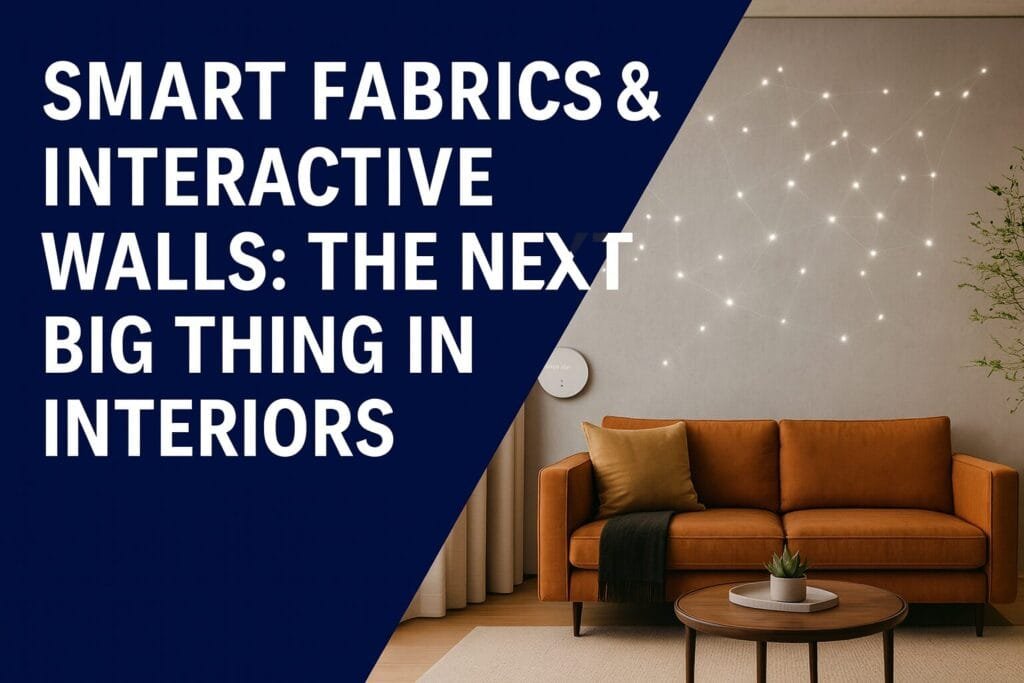
Smart Fabrics & Interactive Walls: The Next Big Thing in Interiors
Interior design is entering a phase of technological revolution. Smart fabrics and interactive walls change the very concept of living spaces. The innovations seamlessly join functionality and aesthetics in ways that seemed impossible just years ago. For many homeowners who want cutting-edge design, learning these trends becomes a must.
A marriage of technology with traditional design principles creates unparalleled opportunities. While working with the Best Interior Designer in Delhi NCR, the clients now access both timeless craftsmanship and futuristic capabilities. The blend of traditional crafts and modern technical capabilities creates beautiful, intelligent, and remarkably functional spaces.
The Rise of Smart Fabrics in Modern Interiors
Smart fabrics represent one of the most elemental design paradigm changes in textiles. These new materials are integrated with technology within their structure. The outcome is upholstery that does more than look good; it actively enhances comfort, health, and convenience.
Materials with integral technologies-such as those that provide moisture resistance or UV protection-are increasingly common in the modern interior. These fabrics aren’t purely aesthetic. They solve real problems that homeowners encounter every day.
The technology works invisibly within the fabric structure, and homeowners get to enjoy the benefits without aesthetic compromise. A sofa looks luxurious, yet simultaneously repels stains and regulates temperature. This is seamless integration and defines the next generation of interior textiles.
MOISTURE-WICKING AND TEMPERATURE REGULATING FABRICS
Advanced textiles today manage moisture and temperature automatically. Smart fabrics draw perspiration away from the body. They can make seating comfortable even during Delhi NCR’s hottest months. The technology works through special fiber structures that promote air circulation.
Temperature-regulating materials automatically adjust according to environmental conditions. They will keep you warm in cool rooms and cool when the temperature increases. This dynamic response creates consistent comfort throughout changing seasons. Such climate-adapting capabilities work especially well in Indian homes.
The practical benefits are significant. Families with children appreciate fabrics that resist spills and remain comfortable; elderly residents appreciate temperature stability that promotes better rest. These functional benefits meld seamlessly with beautiful design.
UV Protection and Light-Responsive Textiles
Sun damage in conventional fabrics degrades with time. Smart textiles instead embed UV protection in their very structure. They are resistant to fading, maintain color vibrancy, and protect occupants from harmful radiation. This proves exceptionally valuable in Delhi NCR homes that boast big windows and ample sunlight.
Light-responsive fabrics go even a step further. They automatically darken under intensive sunlight exposure. This self-adjusting capability maintains comfortable light levels without the need for manual blind adjustments. Such conveniences and energy savings make these materials increasingly popular.
Working with the Best Interior Designer in Delhi NCR ensures that these advanced materials are properly integrated. Rishabh Designs & Interior knows just how to specify smart fabrics that fit aesthetic preferences and functional needs. This knowledge avoids expensive mistakes and secures full benefits of technology.
Antimicrobial and Self-Cleaning Fabrics
Antimicrobial textiles are demanded for reasons of hygiene. These fabrics inhibit bacterial and viral growth on their surfaces. They create healthier living environments with less maintenance. Though first used in hospitals, residential applications are now expanding rapidly.
Self-cleaning fabrics represent the ultimate in convenience innovation. Special coatings cause liquids to bead up and roll off rather than absorb. Spills simply wipe away without staining. This capability revolutionizes high-traffic areas like dining rooms and family rooms.
The technology uses nano-coatings that don’t affect the appearance or feel of fabrics. Homeowners get to enjoy their luxury materials without anxiety about maintenance. This peace of mind is especially important for families with young children or pets.
Interactive Walls Transform Static Surfaces
Perhaps the most dramatic innovation in contemporary interiors is interactive walls. These are not simply decorative elements; they are functional surfaces that respond to touch, voice, or movement. The possibilities extend far beyond the realm of traditional wall treatments.
Interactive walls are high-tech surfaces that respond to user interactions through touches, gestures, or sounds. The technology will turn ordinary walls into dynamic interfaces. Homes acquire capabilities limited to commercial use or science fiction.
These range from practical applications to purely entertaining ones. Smart home systems are controlled by homeowners through wall-mounted touchscreens. Kids play on interactive games projected on bedroom walls. Families showcase their digital art collections on rotation. Such versatility makes interactive walls tailor to varied needs and tastes.
Touch Sensitive Wall Technology
Touch-sensitive walls are like huge tablets integrated into structures that detect the touch of fingers and act accordingly. The technology makes use of capacitive sensors, similar to those screens one finds on smartphones. They detect electrical signs from human touch and trigger programmed responses.
The applications prove to be remarkably diverse: kitchen walls display recipes and cooking videos; home office walls serve as massive collaboration boards; and entertainment rooms become gaming surfaces. The same wall serves different purposes at different times of the day.
Installation has become increasingly straightforward. Professional designers can retrofit existing walls with touch capabilities. New construction integrates the technology during building. In either case, seamless, elegant installations do not obviously appear technological.
Projection Mapping Creates Immersive Experiences
Projection mapping raises wall transformation to an art form. Projection mapping creates extraordinary optical illusions, precisely aligning projected images and animations with surface contours. Projection mapping makes walls move, breathe, and transform.
It is an extraordinary visual effect, where simple surfaces become dynamic canvases with anything possible on them. Nature scenes transport occupants to the forests or beaches. Abstracted animations fill in the meditative environments. The content changes instantly to match moods or occasions.
The global projection mapping market is projected to reach three point four billion dollars by 2030. This growth reflects expanding residential applications. What began in museums and entertainment venues now enhances homes worldwide.
Rishabh Designs & Interior, Best Interior Designer in Delhi NCR, integrates projection mapping into luxury residential projects. Their portfolio showcases how the technology developed elevates commercial spaces for big brands. The same sophistication is applied to residential applications.
Sound-Reactive and Responsive Wall Surfaces
The sound-activated walls, now responding to the music and ambient noise, pulse and flow in rhythm with the audio. These result in synchronized sensory experiences that engage the sight and audio together. Places meant for entertainment use this integration greatly.
The technology analyses audio frequencies in real time. Different sounds trigger different visual responses. Bass notes might create expanding circles, while treble frequencies generate cascading patterns. The result feels organic, alive.
The functional purposes of sound-reactive walls go beyond entertainment. They visualize ambient noise levels in home offices or study areas, creating awareness that helps maintain productive environments. Some systems alert the homeowner if the level of sound reaches a point where it may be disturbing.
Digital Art Displays and Rotating Galleries
Traditional art requires physical swapping and storage. Digital walls remove these constraints: they display entire collections that rotate automatically or upon demand. Homeowners enjoy museum-quality art without permanent commitments to specific pieces.
This technology supports multiple sources of art: subscription services unlock access to thousands of masterworks; personal photos create rotated family galleries; original digital art, commissioned from contemporary artists, adds unique character. The variety is endless.
Colours and resolution have come a long way. Modern displays now offer quality that competes with traditional prints. Proper calibration will help make sure artwork appears the way the artists intend it to be. This kind of fidelity now makes digital displays a legitimate means of presenting art.
Smart Home Integration through Wall Interfaces
Interactive walls are the intelligent control centers of smart homes. They replace the cluttered arrays of switches and remotes with elegant, unified interfaces. Homeowners can control lighting, climate, security, and entertainment from convenient wall locations.
User preference and usage habit adaptation of interfaces show that commonly used controls become prominent, while rarely used functions are hidden in deep menus. This kind of customization results in intuitive and personalized experiences.
Voice command integration makes things convenient: one just orders while walking through spaces, and the walls acknowledge the action visually on the spot. Such multimodal interaction is natural and effortless.
Material Science Behind Smart Textiles
Smart fabric technology becomes truly impressive when appreciated for its sophistication. These are not simple coatings applied to textiles. The technology integrates at the molecular and fiber levels; thus, this fundamental integration ensures durability and performance.
Fabrics with properties like moisture-wicking, stretch, or embedded technology are challenging traditional uses for textiles. The science in the discipline enlists fiber structures engineered to respond to environmental stimuli. Some fibers change shape with temperature, while others conduct electricity or communicate data.
Among the breakthrough technologies are phase-change materials. These absorb heat when the temperature rises and release it when the temperature falls. Incorporated into textiles, they create natural climate regulation. The effect maintains comfortable body temperature automatically.
Color-Changing and Adaptive Fabrics
Color-changing fabrics react to temperature, light, or electric impulses. They produce dynamic visual effects impossible to achieve with conventional materials. A curtain may change from blue to purple depending on the sun’s intensity. Upholstery can darken for movie viewing and lighten for reading.
The technology relies on thermochromic or photochromic compounds. These materials change their molecular structure at certain times because of specific stimuli. The structural changes affect the way they reflect light, therefore producing visible color changes.
Electrically triggered color changes go even a step further. The user chooses colors via an app or wall interface; the fabric responds in a matter of seconds. This new capability allows single rooms to change completely for different occasions or moods.
Conductive Fabrics and Wearable Technology Integration
Conductive fabrics are based on threads carrying electrical current, which permits the integration of sensors, lights, and communication devices. In interior applications, these fabrics connect furniture to smart home systems.
A conductive fabric sofa could detect occupancy and control room lighting automatically. Curtains might be able to sense outside light levels and close themselves. Bed linens could monitor sleeping patterns and communicate with climate systems. Such integrations create truly responsive living environments.
The technology also includes support for wireless charging: Furniture upholstered in conductive fabric charges phones and tablets that are placed on surfaces. This reduces clutter from charging cables and keeps devices powered.
Commercial Applications Entering Residential Markets
Technologies created for commercial spaces reach residential markets. Applications like interactive walls for guest information and concierge services were pioneered in the hospitality industry. Retail stores used them for product displays and interactive catalogs. These proven applications adapt beautifully into homes.
The commercial portfolio of Rishabh Designs & Interior shows this technology at scale. Their projects for Zomato, Burger King, KFC, and Domino’s Pizza show interactive surfaces in some of the most demanding environments. The same durability and sophistication transfers to residential applications.
Cost reductions were driven by commercial developments too: technologies that were once too expensive for residential budgets become more accessible. Homeowners benefit from economies of scale created by commercial adoption.
Installation Considerations and Professional Guidance
Smart fabrics and interactive walls require highly specialized knowledge to install. Poor installation diminishes both performance and lifespan. Working with experienced designers helps ensure that systems perform as intended and integrate aesthetically.
The Best Interior Designer in Delhi NCR understands technical requirements alongside design principles. Rishabh Designs & Interior combines artistic vision with technical competence. Their multi-disciplinary approach prevents common mistakes that plague amateur installations.
Integration requires planning. Designers have to work in consultation with electrical contractors, technology professionals, and traditional artisans. Such consultation will ensure that everything works harmoniously together. Proper planning during design phases prevents expensive corrections during installation.
Power Requirements and Connectivity Infrastructure
Smart textiles and interactive walls require reliable power and connectivity. Houses require up-to-date electrical capacity and proper wiring. Network infrastructure must handle significant bandwidth demands created by multiple interactive surfaces and connected fabrics.
By planning these requirements during design phases, proper integration is possible. Conduits are hidden in the walls, rather than running visibly across the surface of a facility. Power outlets are located conveniently for connected furniture without compromising aesthetics. Forethought such as this distinguishes professional installations from amateur attempts.
These wireless technologies reduce some wiring requirements. However, critical systems benefit from hardwired connections. Professional designers balance wireless convenience against hardwired reliability based on specific applications.
Factors for Maintenance and Longevity
Smart materials have different care than their traditional counterparts. Understanding maintenance requirements ensures long-term satisfaction. Some smart fabrics may need gentle cleaning methods to preserve embedded technology; interactive walls require periodic calibration and software updates.
Quality installations do include comprehensive maintenance guidance. Designers will specify appropriate cleaning products and methods. They also provide software update schedules along with calibration procedures. This support maintains system performance throughout expected lifespans.
Warranty considerations are important, too. Professional installations often come with a manufacturer’s warranty against defects. A designer who knows the products understands the terms of the warranties and ensures installation specifications validate the coverage.
Cost Considerations and Investment Value
Smart materials and interactive walls represent a major investment. Homeowners naturally ask: can costs be justified by benefits? The answer depends on individual priorities, usage patterns, and long-term planning.
Initial costs are much higher than traditional materials. Still, longevity and lower maintenance can balance out high purchase prices. Smart fabrics show resistance to stains and wear better than conventional alternatives do. Interactive walls get rid of the needs for multiple separate devices and controls.
It also increases property value. Tech-savvy buyers covet homes that are outfitted with the latest systems. Well-integrated smart features create valuable differentiation in competitive markets. The potential for premium recovery makes smart materials reasonable long-term investments.
Energy Efficiency and Environmental Impact
Smart materials are increasingly oriented toward sustainability. Energy-efficient operation means lower ongoing costs and environmental impact. Fabrics responsive to light decrease the demands for air conditioning. Interactive walls consolidate multiple devices, reducing overall power consumption.
Sustainable design is being led by eco-friendly fabrics made of organic cotton, bamboo blends, and recycled polyester. More and more smart fabric manufacturers are adopting these base materials. A combination of sustainability and technology appeals to environmentally conscious homeowners.
Some smart systems actively work to reduce environmental footprints. They optimize heating and cooling based on occupancy. They manage natural light to minimize needs for artificial lighting. These efficiencies add up to substantial savings over years while reducing environmental impact.
Cultural Adaptation for Indian Homes
Indian homes have their own set of needs and opportunities. Climates differ across regions, calling for adaptable solutions. Aesthetic choices are dictated by cultural preferences. Smart materials and interactive walls have to meet these demands.
The extreme temperature swings in Delhi NCR make climate-responsive fabrics of particular value. House dust and pollution raise the appeal of antimicrobial, easy-clean materials. These practical considerations combine in aesthetic preferences for rich colors and textures.
The best interior designer in Delhi NCR understands the requirements of the region inside out. They create Rishabh Designs & Interior spaces that respect traditional preferences while embracing modern-day innovations: a perfect blend of traditional Indian design elements with superlative modern technology.
Future Developments on the Horizon
Today’s technologies are only the beginning. Ongoing research promises even more amazing capabilities: fabrics that produce electricity from movement or sunlight; walls that turn transparent or opaque at will.
Artificial intelligence will enhance responsiveness: systems that learn occupant preferences and adjust automatically, predictive algorithms anticipating needs before those homeowners express them. This proactive intelligence will create truly intuitive living environments.
Haptic feedback technology will add tactile dimensions to interactive walls. Surfaces will feel different based on displayed content. Such multisensory integration will heighten the feeling of immersion and further expand the possibilities of application.
Making Smart Choices for Your Home
Smart fabrics and interactive walls require thoughtful planning. First, identify a specific problem or opportunity these technologies address. Not every home needs to have every innovation in it. Strategic implementation yields the best results. Consult with experienced designers at an early stage of planning processes. The Best Interior Designer in Delhi NCR can evaluate which technologies suit specific situations. Rishabh Designs & Interior offers free consultations that explore possibilities without obligation. Quality matters. One well-integrated interactive wall is worth several poor installations; a few key pieces of furniture with smart fabrics are more valuable than mediocre implementations in entire homes. Conclusion Smart fabrics and interactive walls represent the next frontier in interior design. They change what was once an inanimate space into one that is dynamic and responsive. They solve practical problems while creating extraordinary aesthetic experiences. The innovations are not concepts of the distant future. They are available today to those homeowners who are willing to adopt them. Skilled professionals can ensure that such work is carried out successfully, providing long-term value and satisfaction. Rishabh Designs & Interior has been recognized as the Best Interior Designer in Delhi NCR. The company brings experience in traditional design and emerging technologies. Its portfolio includes commercial projects for various international brands and residences for highly esteemed owners. This breadth of experience ensures confident, capable guidance through technology integration. The future of interior design integrates artistry and technology. Smart materials and interactive surfaces complement, not substitute, traditional design principles. They collaboratively create living spaces that have much more to them than just good looks and functionality; they are incredibly intelligent. The question isn’t whether to embrace these innovations but how quickly and strategically to implement them.