How Interior Design Affects Your Lifestyle and Productivity | Expert Guide
Discover how good interior design can improve your daily routine, boost productivity, and create a healthier home environment for your family.
Have you ever walked into a room and immediately felt calm? Or sat at your desk and found it impossible to focus because something just felt off?
That’s interior design at work. And most people don’t realize how much their home setup is affecting their mood, energy levels, and even their ability to get things done.
I’ve worked with families across Delhi NCR, from compact apartments in Janakpuri to spacious homes in Dwarka, and the same issue comes up again and again. People think interior design is just about making things look pretty. It’s not. It’s about creating spaces that actually work for the way you live.
When your home is designed thoughtfully, you sleep better, work more efficiently, and feel less stressed. When it’s not, you waste time looking for things, feel distracted, and constantly think about what needs to be fixed.
Let me explain how the spaces around you are shaping your daily life, and what you can do about it.
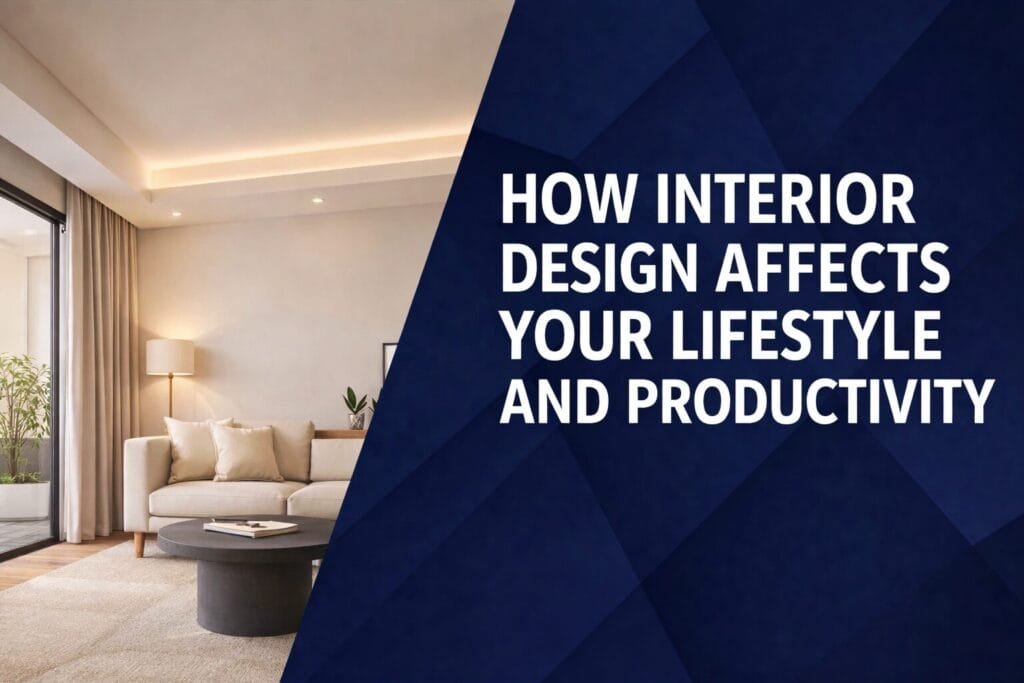
Your Home Layout Affects How You Move
Think about your morning routine. You wake up, walk to the bathroom, head to the kitchen, maybe stop by your closet to grab clothes. How smooth is that flow?
If your bedroom is far from the bathroom and the kitchen is cluttered with stuff blocking the counter, you’re already starting your day with friction. You’re wasting energy before you’ve even had your first cup of tea.
Good interior design creates natural pathways. It arranges furniture and spaces in a way that makes movement effortless. You don’t bump into things. You don’t have to squeeze past the dining table every time you walk to the balcony.
I once worked on a project in Dwarka where the family complained about feeling tired all the time. After spending a day in their home, I noticed the problem. Their living room furniture forced them to walk in awkward zigzag patterns just to get from one room to another. We rearranged everything to create clear, open pathways. Within a week, they told me the house felt bigger and they had more energy.
Small layout changes can make a big difference in how you feel every day.
Clutter Kills Focus
This one’s simple but most people ignore it. Clutter doesn’t just look messy. It actually drains your mental energy.
When you sit down to work and your desk is covered with papers, old cups, random chargers, and things you meant to put away three days ago, your brain sees all of that before it sees your work. You’re already distracted before you start.
The same thing happens in your bedroom. If your nightstand has piles of books, bottles, and random objects, your brain doesn’t register the room as a place to relax. It sees a task list.
Clutter makes you feel like there’s always something unfinished. And that feeling builds up over time. You start avoiding certain rooms. You feel anxious without knowing why.
A well designed home includes enough storage so that everything has a place. Cabinets, shelves, drawers, hidden compartments. When things are put away, your mind is free to focus on what actually matters.
This is especially important if you’re working from home. A clean, organized workspace directly impacts your productivity. Even something as simple as cable management can make your desk feel less chaotic. If you’re setting up a home office and need practical ideas, check out some affordable office interior design solutions that actually work for small spaces.
Lighting Changes Everything
Lighting is one of the most underrated parts of interior design. And it’s also one of the most powerful.
Bad lighting makes you tired. It strains your eyes. It makes colors look dull and spaces feel smaller than they are.
Good lighting does the opposite. It makes you feel awake, alert, and comfortable. It highlights the parts of your home you want to notice and softens the parts you don’t.
Here’s what I see in most Indian homes. One ceiling light in the center of the room. That’s it. No task lighting. No ambient lighting. No layers.
When you rely on one harsh overhead light, everything looks flat. Shadows fall in the wrong places. You end up squinting at your phone or book because the light isn’t actually where you need it.
Instead, use multiple light sources. A floor lamp near your reading chair. A table lamp on your desk. Under cabinet lights in the kitchen. Soft warm lights in the bedroom.
Different activities need different lighting. You don’t want bright white lights in your bedroom at night. You don’t want dim yellow lights over your kitchen counter when you’re chopping vegetables.
Layer your lighting. It makes your home feel more comfortable and helps you do things without straining.
Colors Affect Your Mood More Than You Think
Colors aren’t just decorative. They actually change how you feel in a space.
Bright reds and oranges are energizing. They’re great for social spaces like the living room or dining area. But if you paint your bedroom bright red, good luck trying to fall asleep.
Blues and greens are calming. They lower your heart rate and help you relax. That’s why they work so well in bedrooms and bathrooms.
Whites and neutrals feel clean and open. They make small spaces look bigger. But if you use too much white without any contrast, the room can start to feel cold or sterile.
Yellows and warm tones feel cheerful and welcoming. They work well in kitchens and entryways.
I’m not saying you need to repaint your entire house. But if you’re feeling anxious in a particular room, look at the wall color. It might be working against you.
One client in Janakpuri had painted her study room a dark maroon because she thought it looked sophisticated. But every time she sat down to work, she felt heavy and unmotivated. We repainted it a soft beige with one accent wall in light blue. She told me later that she actually started enjoying her work hours because the room felt lighter.
Colors matter. Choose them based on how you want to feel in that space, not just what looks trendy.
Furniture Placement Impacts Conversation and Connection
This is something most people don’t think about. Where you place your furniture determines how you interact with the people in your home.
If your living room sofa faces the TV and nothing else, guess what happens? Everyone sits in a row, stares at the screen, and barely talks to each other.
If your furniture is arranged in a way that people can actually see each other’s faces, conversation happens naturally. You create a space where family members want to sit together.
Try arranging your seating in a loose circle or L shape. Add a coffee table in the middle so people have a place to set down their chai. Make sure there’s enough space to move around but not so much space that people feel far apart.
Small changes in furniture placement can make your home feel more connected. And that affects your lifestyle more than you realize. Homes where families actually talk to each other feel different. They feel warmer.
If you’re redesigning your living space or need help figuring out the best layout, working with a professional team at Rishabh Designs & Interior can save you a lot of trial and error.
Your Workspace Setup Directly Impacts Productivity
If you work from home, this section is critical.
Your workspace isn’t just a desk and chair. It’s the environment that either helps you focus or constantly distracts you.
First, location matters. Don’t set up your workspace in a high traffic area. If people are walking past you every ten minutes, you’ll never get into deep focus. Find a corner, a separate room, or even a section of your bedroom that feels somewhat private.
Second, ergonomics matter. If your chair is uncomfortable or your desk is too high or too low, you’ll spend half your day adjusting your posture instead of working. Invest in a decent chair. Make sure your screen is at eye level.
Third, keep it minimal. Your workspace should only have what you need for work. No random stuff. No distractions. If you can see your bed from your desk, you’ll want to nap. If your workspace doubles as a storage area, you’ll feel cluttered.
Natural light helps too. If possible, set up near a window. Sunlight keeps you alert and reduces eye strain. If that’s not an option, use a good desk lamp with adjustable brightness.
Your work environment affects how much you get done and how you feel at the end of the day. A well designed workspace makes work feel less like work.
Good Design Supports Healthy Habits
Interior design can actually help you build better habits. Sounds strange, but it’s true.
If you want to read more, create a cozy reading nook with good lighting and a comfortable chair. You’ll naturally spend more time there.
If you want to exercise at home, clear out a corner and add a yoga mat or a small bench. Make it easy to access. You’re more likely to use it.
If you want your kids to study without being told, give them a dedicated study table with organized shelves and proper lighting. Make it a space they actually want to sit in.
Design shapes behavior. When your environment supports what you want to do, you do it more often.
On the other hand, bad design creates resistance. If your yoga mat is stuffed in a closet behind three boxes, you’re not going to pull it out every morning. If your study table is cluttered and uncomfortable, you’ll avoid it.
Make the things you want to do easy. Make the things you want to avoid harder.
Common Mistakes Homeowners Make
Let me share a few mistakes I see all the time.
Mistake 1: Buying furniture before measuring the space.
People fall in love with a sofa in the showroom and buy it without checking if it actually fits their living room. Then it arrives and it’s either too big or looks awkwardly small. Always measure your space first. Know your dimensions before you shop.
Mistake 2: Ignoring storage.
Homeowners focus on aesthetics and forget that they actually need places to put things. Six months later, their beautiful minimalist home is covered in stuff because there’s nowhere to store it. Plan for storage from the start.
Mistake 3: Following trends instead of lifestyle.
Just because open shelving is trendy doesn’t mean it’s right for your kitchen, especially if you live in a dusty area or cook with a lot of spices. Design for how you actually live, not for Instagram photos.
Real World Scenario: A Family’s Transformation
Let me share a real example.
A couple in West Delhi reached out because they both started working from home and their apartment felt chaotic. They had two young kids, no separate rooms for offices, and the dining table had become a dumping ground for laptops, school books, toys, and mail.
We didn’t have a big budget. We couldn’t add rooms or do major construction. But we did a few smart things.
We created a small workspace in their bedroom using a foldable desk and a room divider for privacy. We added wall mounted shelves in the kids’ room so toys had a home instead of spreading everywhere. We rearranged the living room to separate the play area from the sitting area using a simple rug and furniture placement.
Within two weeks, the husband told me he was getting more work done. The wife said she felt less stressed because the house didn’t look like a mess all the time. The kids started putting their toys away because it was easy and they knew where things went.
That’s what good design does. It makes life easier. For more examples of how thoughtful design solves real problems, you can explore the project portfolio at Rishabh Designs & Interior.
It All Comes Down to Intention
Interior design isn’t about spending a lot of money or making everything look perfect. It’s about intention.
Every choice you make about your home, from the paint color to the furniture layout to the lighting, should support the way you want to live. If you want a calm, productive home, design for that. If you want a social, energetic space, design for that.
But don’t leave it to chance. Don’t just buy random furniture and hope it works out. Think about how you move through your home. Think about what frustrates you every day. Think about what would make your routines smoother.
Small, intentional changes can completely shift how your home feels and how you feel in it.
Final Thoughts
Your home is more than just a place to sleep. It’s where you recharge, where you work, where you spend time with the people who matter. The way it’s designed affects everything from your mood to your productivity to your relationships.
If your home isn’t supporting the lifestyle you want, it’s worth taking the time to fix it. You don’t need a complete renovation. Sometimes it’s just about rearranging furniture, adding better lighting, or creating dedicated zones for different activities.
Pay attention to how you feel in each room. Notice what’s working and what’s not. Make changes based on your actual needs, not what looks good in a magazine.
When your home is designed around your life, everything gets easier. You’ll sleep better, work better, and feel better. That’s the real power of good interior design.
If you’re ready to make changes but not sure where to start, talking to an experienced interior designer can help. They can look at your space with fresh eyes and suggest practical solutions you might not have thought of. Whether you need help with a full home makeover or just want to optimize one room, Rishabh Designs & Interior works with homeowners across Delhi NCR to create spaces that actually improve daily life. Sometimes a professional perspective is all it takes to turn a frustrating space into one that works for you. Feel free to get in touch for a free consultation and see what’s possible for your home.